Showing posts with label middle grade. Show all posts

Monday, March 17, 2014

Interrogation Room #38: Laura Marx Fitzgerald (UNDER THE EGG)

When we sleuths picked up chatter about a fantastic new debut novel in the vein of CHASING VERMEER and FROM THE MIXED UP FILES OF MRS. BASIL E. FRANKWEILER, we had to track down its author, Laura Marx Fitzgerald. Today -- on the eve of the release of her much-anticipated UNDER THE EGG, we've managed to haul Laura into the Interrogation Room.


When Theodora Tenpenny spills a bottle of rubbing alcohol on her late grandfather’s painting, she discovers what seems to be an old Renaissance masterpiece underneath. That’s great news for Theo, who’s struggling to hang onto her family’s two-hundred-year-old townhouse and support her unstable mother on her grandfather’s legacy of $463. There’s just one problem: Theo’s grandfather was a security guard at the Metropolitan Museum of Art, and she worries the painting may be stolen.


With the help of some unusual new friends, Theo's search for answers takes her all around Manhattan, and introduces her to a side of the city—and her grandfather—that she never knew. To solve the mystery, she'll have to abandon her hard-won self-reliance and build a community, one serendipitous friendship at a time


And here's a bit about Laura: 


Laura moved around a lot as a child, living everywhere from Norman, Oklahoma to Pensacola, Florida. A Harvard graduate and former copyeditor, Laura never imagined she'd write a novel until she had an idea about a girl who discovers a stolen painting in her attic. That novel is UNDER THE EGG. Laura lives in Brooklyn with her husband and two kids.


UNDER THE EGG is an Indie Next pick and has been selected as one of Amazon's top spring titles. It releases on March 18th (tomorrow!). We feel lucky we managed to nab Laura first....


1. What inspired you to write UNDER THE EGG? Do you have any unique experiences or interests that drove you to develop the story?

I studied art history in school and, honestly, found it a disappointing experience. I realized that what interested me was the stories art inspired, not the specifics of brushwork or provenance. Twenty years later I was watching Antiques Roadshow, and I was struck by how it captured what makes art interesting for most people. Where did the piece come from? Who made it? Why? What story is it telling? How did it get here?

Around that time, I was reading a fantastic book by Edward Dolnick called The Forger’s Spell, whenthese three lines jumped out at me:

The easiest test of an old master—and the one test almost certain to be carried out—is to dab the surface with rubbing alcohol. In a genuinely old painting, the surface will be hard, and the alcohol will have no effect. If the painting is new, the alcohol will dissolve a bit of paint, and the tester’s cotton swab will come up smudged with color.

That gave me the idea that someone might intentionally paint over a more valuable painting, with the plan to later remove the top layer. All those Antiques Roadshow questions came back to me—who made it, and how did it get here?—and Under the Egg was born.


2. What is the most challenging thing about writing a mystery for young readers? What's the most rewarding part?

I was absolutely blown away by The Westing Game as a kid. I started re-reading it as soon as I finished to see how all the pieces fit together. When I decided to write a mystery, I wanted it to do the same thing for the same audience.

What I admired about The Westing Game too is that the book doesn’t shy away from adult topics.Bombs, bookies, religious extremism, and degenerative disease all make an appearance in the book. I find the subjects that interest me lie squarely in the adult world, while my ideal audience is much younger. That means I have to work hard to find ways to make these concepts understandable and digestible for middle grade readers.

After all, what are the middle grade years for if not to uncover all the secrets adults have been hiding from you?

3. What is your writing process like?

I always start off with lots of reading and research. I love discovering the impossible-but-true stories that have been lost to history, so I follow the stories from one book to the next. For example, my reading for Under the Egg led me from The Forger’s Spell to a book about the widescale Nazi looting during World War II to The Monuments Men (the source for the recent George Clooney movie). Elements of each book made it into Under the Egg.

Once I’m ready to outline—and I live and die by a meticulously detailed outline—there’s an enormous amount of procrastination, punctuated by fluctuating spells of crushing self-doubt and manic creative energy. But once the outline is finished, then I get down to business: 9:00a.m.-12:00p.m. Monday through Friday, at my computer until I have a draft.


4. What have been some of your favorite mysteries, real-life or fictional?

The Name of the Rose. Possession. The aforementioned Westing Game. And Encyclopedia Brown, of course.

5. What is something that no one knows about you?

I've never read A Wrinkle in Time.

6. What writing secret will you reveal only under the harsh glare of the interrogation room lights?

As long as you’re wearing gym clothes, the people at the YMCA Childwatch will think you’re dropping off your kids to work out and not to revise your draft in the hallway.

Leave it to a mystery author to have a sneaky trick up her sleeve. Congratulations on your debut, Laura. We were thrilled you took the time 

Want to learn more about Laura?


Follow her on Twitter @MarxFitzy

Tuesday, February 18, 2014

On the Trail of....Middle Grade Mysteries!

There's a wealth of exciting middle grade mystery titles releasing in the next few months. I thought I'd highlight a few that caught my eye -- as well as one that I've already been lucky enough to read an early copy of: Indie New Voices pick Eddie Red Undercover by Marcia Wells, who we'll be hauling into the Interrogation Room very soon!


I picked up a copy of Caroline Lawrence's first P.K. Pinkerton mystery, The Case of the Deadly Desperadoes, at Oblong Books last summer and was immediately riveted. It was so wonderfully written and rich with accurate historical detail but also packed with high-stakes adventure. It's an especially great addition to school reading lists. Kids hardly notice all they're learning! The second in the series, P.K. Pinkerton and the Petrified Man, was just nominated for an Edgar. I'm looking forward to reading both soon. P.K. Pinkerton and the Pistol-Packing Widows comes out March 6.


I discovered this debut when librarian Betsy Bird was gushing about it at Fuse News. A modern Mixed Up Files? I'm in! Theodora Tenpenny discovers a Renaissance masterpiece among her late grandfather's things--yet fears it might be stolen. Her search for the truth takes her all over Manhattan, introducing her both to new friends and a new side of her own city. It sounds like my ideal book--a mix of heart, friendship, and intrigue. (Releases March 18)


During the peak of the Red Scare, rumors swirl that a suspected Russian spy has infiltrated a sleepy Vermont town. Two enterprising kids seek the truth--and discover some surprises about their town along the way! I can't think of any middle grade mysteries set in the McCarthy era, and the exploration of the mob mentality of the time seems like it would provide some great fodder for class discussion. I'm very curious about this one! (Out


Last but not least, there's Indie New Voices pick Eddie Red Undercover: Mystery on the Museum Mile, coming April 1st. Once Upon A Time Bookstore bookseller Kris Vreeland handed me an early copy of this one, and I was immediately charmed by Wells' humor and authentic middle grade voice. When ace artist and sixth grader Eddie Red witnesses a crime, his suspect sketches attract the police's attention. Soon he's a critical tool in capturing a nefarious group of art thieves called The Picasso Gang. It's a fast-paced, fun read perfect for younger middle grade readers. I haven't gotten a chance to see all the illustrations, but I'm especially excited about them: I'm a big fan of illustrator Marcos Calo, who also did the cover of my debut, The Wig in the Window.

Stay tuned, as Marcia Wells will be joining us soon for an interview in The Interrogation Room!


Tuesday, November 5, 2013

Interrogation Room #35: Lisa Bullard


We're heading to the midwest for our next suspect in our interrogation room. Lisa Bullard hails from the land of 10,000 lakes (that'd be Minnesota), a setting that factors prominently in her new middle grade mystery, TURN LEFT AT THE COW.

First, a little bit about TURN LEFT AT THE COW:

Thirteen-year-old Trav has always wondered about his dead-before-he-was-born dad. But when he heads from California to his grandmother's house in rural Minnesota, hoping to learn about his past, he gets more than he bargained for.

It turns out his dad was involved in a bank robbery right before he mysteriously disappeared, and the loot from the take is still missing. Along with Kenny and Iz, the kids next door, Trav embarks on a search for the cash. But the trio’s adventure quickly turns dangerous when it becomes clear that someone else is looking for the money—someone who won’t give up without a fight!
So, what was the original seed of this novel? Did you start with the Minnesota setting, a character, the crime, or something else? Did you know from the outset that you were going to be writing a mystery?

Piecing together the origin story for TURN LEFT AT THE COW is like piecing together the clues to a good mystery—there were so many different things that came together to nudge the story into being. But one of my favorite “seeds” was a creature called a walking catfish. I was doing research for a nonfiction book about animals and I stumbled across a description of this fish, which, when its pond turns toxic or no longer provides enough nutrients, can actually shimmy across land until it finds a better pond. I was enthralled by the idea of this literal fish out of water. I knew right away I wanted to create a human character who was inspired by this fish to leave his/her own “toxic pond” and go looking for a better environment—a “pond” that was initially strange and mysterious, but ultimately as right and necessary as air (or as necessary as water—I’m still not completely clear how this fish manages this trick!).

And I did always know it was going to be a mystery, partly because I love reading mysteries, and partly because of a different surprise element that also popped up very early in the writing process.

TURN LEFT AT THE COW explores not only a mystery about a family secret, but also a story about how Travis navigates the complexities of family dynamics and other relationships. How important do you think it is for young sleuths in mystery novels today to be fully realized, complex characters – as opposed to the traditional Nancy Drew/Hardy Boys model, where the primary objective is mystery-solving?

Travis is thirteen, and I think that it is at around that age that a person starts to realize that your own life is actually a puzzle to be solved: Who am I, apart from the people who have raised me or contributed to my DNA? Who do I want to try to be as I move towards becoming my own fully independent person? So I knew that untangling Travis’ complex family relationships, and his personal quest to figure out the missing pieces of himself, would be their own layers of mystery in this story.

But I admit that I love a good puzzle no matter what—I’m a big fan of mysteries that are character-driven, but I’m also a fan of mysteries that are more about the puzzle. And I think that there are readers for both kinds of books, so I tried to incorporate some of each in my story. Along with the other questions at hand, TURN LEFT AT THE COW also has body parts in a freezer chest, the unsolved disappearance of a bank robbery suspect, and a missing treasure that is possibly buried on a deserted island.

Prior to writing a middle grade mystery, you wrote picture books and nonfiction books for younger readers. What was it like to switch genres and audiences? Did writing for other readerships help you at all with the writing of this book?

Switching to a whole new genre and audience had me sweating it out worse than a guilty suspect in a lineup! My biggest struggle was in trying to figure out how I was going to write something so much longer than the other books I’d written, most of which had brevity as a major requirement—I was used to the mandate that my books could be no longer than 600 words, and now I was looking at something a hundred times longer than that.

Then I got some great writing advice from an unexpected source. I did a lot of school visits, and kids who were too old for my picture books would beg for a longer story. This happened often enough that I had actually created a long-winded explanation for why some writers (like me) were better off sticking to short pieces. But one day, this 5th-grade boy called me on me on my feeble excuse. He rolled his eyes at me big-time and said, “Oh, just write a bunch of short things and stick them all together!” In my defense, it only took me a moment to realize that the kid had a great point: Wow, I thought, I think they’re called CHAPTERS!

And yes, writing nonfiction for young readers did prove to be a big help with writing a mystery. Along with giving me the walking catfish idea, it taught me how to piece together seemingly disparate bits of research into a coherent whole—which turned out to be great training for turning a series of clues into a tightly plotted mystery.

What do you find to be the hardest part about writing mystery novels for a younger audience? Did you face any particular challenge in writing a middle grade mystery – and if so, how did you overcome it?

The irony is that when I first set out to write this novel, I thought I was going to write a mystery for adults, a story that featured a 34-year-old woman in the same rural Minnesota setting. But I just couldn’t get past the opening few chapters. Then I took a writing class from a mystery writer named Ellen Hart who is both a fantastic teacher and writer. She gave us an assignment the very first night that made me rethink my character, and a new voice marched in and took over—the voice of a young teenage boy. He had so much energy and such a desire to tell his story that I knew if I just followed his lead, I could finally finish the book.

The challenge after that was in figuring out whether it was a YA book or a middle grade book—I thought it was meant to be YA, but when I started submitting it, I kept hearingback from editors that it should be middle grade. I realized I had to make Travis slightly younger and shift other elements in the story accordingly. It took me a while to get comfortable with this shift, but it became obvious even to me that it was the right thing to do, so I ignored the manuscript for a few months and then came back to it with a fresh perspective and made the necessary changes.

What is the best part of writing a mystery for younger readers? (Or: what was most pleasurable for you about writing this book?)

I know, from working with so many students over the years, that many young readers approach books with a great intensity—they completely invest themselves in the stories they love. They live inside them in the same way I lived inside this story while I wrote it. It was very satisfying to imagine connecting in that way with the eventual readers of this story.

Are you an avid mystery reader yourself? What have been some of your favorite mysteries, real-life or fictional?

I have been an avid mystery reader for most of my life. When I was young, I inherited a huge box of books that had first been my mom’s, and then was added to bymy older cousins. So alongside Nancy Drew, Trixie Belden, and the Three Investigators, I read the wonderful out-of-print Judy Bolton series.

As for real-life mysteries, D.B. Cooper was a big inspiration for TURN LEFT AT THE COW. I found a newspaper article about a man who was convinced his brother was the missing hitchhiker, and it started me to wondering what it would be like to discover that a close relative had committed an infamous unsolved crime.

Have you ever solved a "real life" mystery?

Other than an uncanny ability to discern people’s motives (a great asset for any writer), I can’t think of anyreal-life mystery I’ve solved. But there was another real-life mystery that inspired my story. My cousins and brothers and I spent our childhood summers visiting a lake cabin owned by my grandparents, and we grew up hearingabout the mystery of Green Lake. Years before, a small plane had crashed into the lake and was never found, despite regular searches by trained divers. We started taking out the canoe to search for the plane ourselves, convinced that somehow a bunch of kids might be able to track down something that the adults hadn’t managed to find.

So as a fellow midwesterner, I love the setting of your novel--there aren't enough books set in the woods and water of the upper midwest, as far as I'm concerned! I especially loved how you've included such regional details, like dairy product sculptures and live-bait vending machines in TURN LEFT AT THE COW. I'm wondering though, for our readers who have only ever flown over the midwest, would you care to explain one of Minnesota's local specialities...hot dish?

I’m laughing so hard at that question that if I had happened to be eating my favorite childhood hot dish at the moment, it would probably be snorting out my nose. Some people know hot dish by the name “casserole.” If that still doesn’t clear things up for you, the key thing to know is that you can find maps of Minnesota sectioned out by the kind of hot dish they are most likely to serve when they want to show off at the church potluck, and they tend to fall into two basic camps: those that have as their base Campbell’s Cream of [fill in the blank] Soup, and those that feature Campbell’s Tomato Soup. It’s a little bit like northern versus southern Italian cuisine, except with Tator Tots or Shoestring Potatoes on top.
What do you mean you’re still confused? It’s as if you grew up not eating SPAM, or something! Here’s what’s even funnier about your question—in the earliest drafts of the book, when it still had an adult main character, hot dish was actually going to be the key clue to the solution of the mystery. I kept a mention of it in the story as a nod to that early incarnation. Good for you for ferreting that out!

Will there be more adventures for Travis? Or more mysteries? (We hope!)

It’s time for my big confession! Although I can no longer get away with the alibi that I can only “write short,” I am still the world’s slowest writer. And I do a LOT of writing in my head before any actual words make it onto my computer screen. I’m still in that early stage of writing where everything feels like a dark and stormy night, but I’m hopeful that some clues will start to emerge soon as to the true shape of my next mystery.

What writing secret will you reveal only under the harsh lights of this interrogation room?
I have a love-hate relationship with writing. I spend a lot of time and energy figuring out ways to avoid having to do it, because initially, it’s often painfully hard. But once I do finally get going, I become completely immersed in the story-world: I dreamscenes every night and spend entire business meetings secretly plotting surprise developments. I go on 24-hour writing binges where I’m shocked to realize that the sun is actually rising and I haven’t yet been to bed. I guess it’s the equivalent of any serious addiction!

**********************************


Lisa Bullard is the author of the new middle grade mystery Turn Left at the Cow (Harcourt, October 2013). She’s also written picture books and nonfiction titles for young readers, includingTrick-or-Treat on Milton Street and You Can Write a Story. Lisa’s awards include a Children’s Choice Award, an honor for the Storytelling World Award, and two Teacher’s Choice Awards. Lisa teaches writing through the Loft Literary Center and lives in Minneapolis. You can find out more about Lisa at her website at lisabullard.com.


Tuesday, October 22, 2013

The Mystery of the Common Core

Say the words “Common Core” to a teacher or librarian and get ready to hear some heavy sighs. It’s exhausting hearing about one topic so much, let alone figuring out how to align curricula to it.

However, as far as I can tell, the fairly open-ended standards of the Language Arts Common Core mean that just about any novel can go along perfectly with them! What novels don’t have themes or settings or points-of-view to discuss?

I’d like to make a case that mysteries, in particular, are a great fit:

1) Mysteries reward close reading

Looking carefully at a text and citing examples for interpretations is a major focus of the Common Core. With possible clues hiding at every turn, a fast-paced mystery with substance can keep students focused and immediately understand the rewards of paying close attention. It’s much more fun to look at how lines reveal character (CCSS.ELA 8.RL.3) when figuring out which characters are trustworthy and which are suspects, isn’t it?

2) Mysteries encourage analysis, making predictions and drawing inferences


Reading mysteries are all about subtext, making logical deductions, and predicting what’s going to happen next – all bedrocks of the Common Core.

 In fact, several of the standards even seems especially designed for mysteries: “Analyze how differences in the points of view of the characters and the reader create such effects as suspense or humor.” (RL8.6) or “Cite textual evidence to support analysis of what the text says explicitly as well as inferences drawn from the text.” (RL.6.1)

(Though I wish students good luck analyzing what makes something funny. I'm not sure anyone has ever succeeded at that.)

3) Mysteries are high-interest but also often have significant “text complexity”

The Common Core focuses on deeper comprehension of challenging texts as a way of counteracting our culture of skimming. Mysteries are by their very nature complex – they have to be to avoid being totally predictable! Plot twists, non-linear narratives, and a large cast of characters are common. Best of all? Mysteries don’t seem complex or impenetrable; kids are highly motivated to keep turning the pages to get to the resolution.

4) Mysteries inspire fun potential writing assignments (that meet the CCSS standards)!

A key part of the standards revolves around writing persuasively: how do you support an opinion with evidence? This could be an especially fun assignment when it comes to a mystery! Students can put forth their own theories about suspects as they read and present their reasoning to classmates.

Of course, narrative writing is an important part of the Common Core, as well. I may be biased, but what’s more fun than writing your own mystery?

Hope you’ll check out our books to see if any might be a good mystery choice for your class. You could even win one if you act fast - F.T. Bradley's DOUBLE VISION: CODE NAME 711 is hot off the presses and we're running a contest through the end of today.

Note: You can find a CCSS-aligned discussion guide for The Wig in the Window here. Interested in a 20 minute Skype session for your class? Let me know. They are free for any class who's reading the book (I'm all full for the fall but am currently scheduling for the winter and spring.)


-----------------------------------------------------------------------------------------------------------------------
Kristen Kittscher was a child neighborhood spy but (allegedly) grew up to be an upstanding citizen, seventh grade English teacher, and writing tutor. A graduate of Brown University, she lives in Pasadena, California with her husband, Kai. The Wig in the Window is her first novel. Visit kristenkittscher.com to investigate more about her.


Tuesday, March 19, 2013

Spring is in the air...

The future's on my mind lately. Maybe it's because my own middle grade mystery, THE WIG IN THE WINDOW, is coming out in June? I thought I'd take a look at the marvelous, mysterious company it will be joining on the shelves --- both current and upcoming.

Has anyone got their hands on one of these titles yet? I'd be curious to hear what you think!


 Blue Balliet's a beautiful writer who manages to create layered, complex mysteries with well-developed characters that are nevertheless suspenseful. I enjoyed CHASING VERMEER and THE DANGER BOX, so I just picked up her latest at Vroman's in Pasadena the other day. This story of a girl who falls into Chicago's foster care system and must solve the mystery of her father's disappearance sounds full of heart and compelling. In stores now.


We were lucky enough to nab New York Times best-selling and Edgar-winning author Peter Abrahams for an Interrogation Room interview last year when his first book in this series, Robbie Forester and The Outlaws of Sherwood Street came out. Sounds like Abrahams has followed up that action-packed tale with an equally thrilling mystery with a social message: this time Robbie is on the tail of a murderer who knocked off one of her friend's fathers just to build an apartment complex... Out May 16th from Philomel


The cover of this debut from Candlewick mesmerized me -- isn't it something else? Zebra Forest's description sounds dark for middle grade, but I'm intrigued by what sounds like an intricate, well-written tale about an eleven year old who uncovers family secrets when she's held hostage by a fugitive. Its flap copy says it's "driven by suspense and psychological intrigue"; Jen Robinson called it "dark and brooding" book that will nonetheless appeal to young suspense fans. Coming April 9 from Candlewick.


Colby Sharp and other fellow Nerdy Book Club members have been singing the praises of this wacky illustrated tale of two detectives, a missing teacher, and a duffle bag full of fish -- it looks like such an adorable, funny, high-interest read. Jarrett Krosoczka's Lunch Lady series is already such a hit, and I'm sure this won't disappoint. Out May 7 from Walden Pond Press.


 One of my favorite middle grade mysteries of 2012 was Kate Messner's CAPTURE THE FLAG, which introduced us to the junior members of "the Silver Jaguar Society," a group charged with protecting the world's most important artifacts. It offered a wonderful mix of fun, great characters, tight plotting -- not to mention a great educational angle and spot-on middle grade voice. I'm looking forward to the next installment, HIDE AND SEEK, which will be out in just a few short weeks!

What titles are you looking forward to?


Tuesday, February 12, 2013

Fresh Blood: Sarah Skilton Discusses Why Mystery Elements are Vital in Non-Mystery Books

Okay, you twisted my arm. Confession: my upcoming debut novel, BRUISED (Abrams/Amulet Books) is not a mystery.*

However, it does contain mystery elements. I've come to believe every kind of book, no matter the style or genre, can benefit from the use of mystery techniques. That's because writing a page turner requires posing questions readers must want to get answers to.

Carrie Arcos' extraordinary Young Adult novel, OUT OF REACH (Simon Pulse, 2012), is about a teenage girl, Rachel, searching for her missing brother, a meth addict who has disappeared. The story isn't labeled a mystery, but readers are immediately wondering three things: Why did the brother run away? Where did he go? And most importantly, Will Rachel find him?

With only one clue to go on -- an anonymous email -- Rachel and her brother's friend, Tyler, set off on their search. The book is considered contemporary YA, and it contains excellent characters and backstory, but the mystery elements are what drive the plot.

Likewise, in Sarvenaz Tash's terrific middle grade adventure book THE MAPMAKER AND THE GHOST (Bloomsbury, 2012; out in paperback March 26), 11-year-old Goldenrod Moram has decided to draw a map of her town. While in the woods, she overhears a group of kids who are up to no good, and she needs to figure out what they're scheming or her younger brother could pay the price. Readers, too, will be curious about the gang (whose entertaining nicknames include Brains, Snot Shot, and Lint).

In my own BRUISED, a 16-year-old girl skilled in martial arts freezes up at an armed robbery and blames herself for not preventing a shooting. The incident is so upsetting that she buries part of it away so it can't hurt her. The main focus of the novel is her relationships -- with her parents, friends, martial arts instructor, and the boy who also witnessed the crime -- but readers will hopefully be compelled to discover what Imogen's missing memories are.

Using mystery elements in non-mystery books provides a feeling of suspense as well as a reason for a reader to commit to the story.

*How did my riff-raff self get invited to join Sleuths, Spies, and Alibis? The easy answer is that my second book, HIGH AND DRY, is an actual mystery.

Sarah Skilton lives in California with her magician husband and their young son. BRUISED received a starred review from Publishers Weekly and comes out March 5th, 2013, but you can enter to win Sarah's very last ARC (advance readers copy) at GoodReads right now!

If you live in L.A., consider attending Teen Author Night at LAPL.

Tuesday, October 30, 2012

Four Favorite Spooky Middle Grade Reads

With Halloween just a day away, what better time to settle back with a scary book?

Here are some of my favorite spooky reads for middle-schoolers....

JANE-EMILY by Patricia Clapp
Though I first read this recently, I'm positive that the nine year old me would have read the cover off of this wonderfully gothic, creepy story about a girl and her aunt who visit a rambling mansion  haunted by the ghost of an evil child. Mysterious mansion. Orphan. Eerie reflecting ball in the garden. Malevolent child ghost. Does it get spookier than this? This is a HAUNTING OF HILL HOUSE for young readers. Not for the faint of heart -- but perfect for precocious readers who don't mind sleeping with the light on for, oh, a week or two. (Kidding. Sort of.)

I love these beautifully written Poe-like tales that are woven into a novel but could stand-alone for classroom read-alouds, as well. Priestley is a master of atmosphere and surprising twists, and the surreal quality to many of the stories that "Uncle Montague" tells his young nephew, Edward hung with me long after I finished reading. Priestley's deft use of language make this a great book for writing teachers to have a look at, especially.

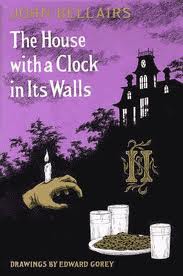
Bellairs books dominate my childhood memories so much that I'm always surprised that so many people my general age haven't heard of him. This book is the first in a series about Lewis Barnavelt, an anxious yet endearing overweight ten-year-old who has all sorts of creepy adventures after he moves in with his wizard uncle. The books skillfully interweave Lewis' challenges at school with his scary missions, making Bellairs' books much more than quick entertaining reads. His books are probably better for 10+, as they can get quite intense.

No doubt you've already read this fantastic 2009 Newbery winner about a young boy adopted and protected by the denizens of a graveyard, but a list of my favorites wouldn't be complete without it. If you haven't discovered it yet, it's time!

Happy Halloween!


********************************************************************************************

Kristen Kittscher grew up in many different places, including San Francisco, Dallas, and London but she feels most at home in Southern California, where she lives with her husband. A graduate of Brown University and former English teacher, she now writes funny mysteries for the precocious middle-schoolers she once enjoyed teaching so much. Her debut novel, The Wig in the Window, comes out in Summer 2013 with Harper Children’s. She's at work on the sequel, The Tiara on the Terrace.
Related Posts Plugin for WordPress, Blogger...