Showing posts with label writing process. Show all posts

Tuesday, October 7, 2014

Spark on the Lam

If writers are the stars in our own TV police procedurals, then drafting a novel is like hunting down a fugitive in a back alley. Okay, we're probably not as tough as cops, but bear with me as I try to flesh out the simile!

There’s always some inspiration (clue) that initially sparks us: an image, a bit of dialogue, a character already talking in our heads, a premise so irresistible that it tingles in our fingers as we type.

So we go after it. At the beginning of the chase it all seems so clear and so doable—it’s right in front of us…. Almost grabbable…

Of course, that’s usually when the fugitive ducks around the corner and disappears and we’re left holding onto his hoodie.

That’s the darkest before dawn moment, when the cop (writer) wonders if they’ll ever solve the case. When we're so mired in the uncertainty of the process nothing is obvious anymore and nothing seems to be working. It’s even more difficult to keep up the pursuit when we no longer know what we’re looking for. (If you really want to make my TV cop comparison complete, we’d probably also be coping with in some personal problems, a failing marriage or some other crisis here, because all the good characters have them…)

But here’s the thing. That spark we’re chasing turns out to be a red herring. It’s what we thought we were looking for until we discover something even better, something that’s right in front of our noses. When we stop going after that elusive thing and we work with what we actually do have, the cold hard evidence of what’s already on the page, the real story emerges. That's when we get our man (story).


Tuesday, April 9, 2013

The Mystery of the Disappearing Hours (or, Finding Time to Write)

One of the number one questions I’ve gotten this year as I’ve done book events for Malcolm at Midnight is: “How do you do it? How do you work full-time and have two kids and still find time to write?”

The question flummoxes me a little because I don’t have a good answer. Truthfully, most days, I’m frustrated with my lack of writing time. I don’t feel like I do a good job of it. I am an incredibly S L O W writer. But people don’t want to hear that. They want to hear about a magic formula to increase word count or some nifty trick to sleeping less—or maybe even that I’m making ridiculous sacrifices they would never, ever consider: “Well, I buy my kids disposable clothes." Or, "We only eat drive-through, except on third Sundays.”

But if I’m being kinder to myself, I actually DO write. I have published books, so there is physical proof of it, even if it feels like I don’t. Yes, I wish I could write faster and more efficiently. But I am writing. And I do--somehow--make time for it.

Here are my secrets to writing in the midst of busy-ness.

I find the time because I like it.

I haven't watched a Packer game since
they won the Superbowl.  (This is
probably actually considered a ridiculous
sacrifice for most Wisconsinites.)
One of the best things about having a “day” job, is that I don’t HAVE to write. I have a steady income. I have insurance. I have a retirement fund. Any writing that I do is purely because I WANT to do it. Sometimes I tell myself, “Don’t feel like writing? Then don't. Quit.” But I always come back to it. I enjoy writing. Others shop or watch the Packers or scrapbook or bake in their spare time. I write.

I don't have a writing time or place. 

If I waited for “writing time,” it would never happen. I have to constantly be on the offense and aggressive about compiling bits and pieces of time to write. Get up a half hour early. Write for 15 minutes during lunch. Write while the pasta boils. Be the anti-social parent who writes in the car while waiting for baseball practice to be over. If you do this regularly enough, eventually, there is something long and book-like.

I write, even when I don’t want to.

Lest you think it’s all hearts and daisies…yes, there are some days I don’t want to write. Many, many, MANY days--when I’m tired, grumpy, and lazy. And on those days…I make myself write. Because that’s what writers do. On those tired, grumpy, lazy days, I ask myself, “Do you want to be a writer? Or do you want to watch Dancing with the Stars?”

I embrace the low-tech. 

There’s a lot of discussion about what online presence sells books best. I cling to the train of thought that writing another book is the best use of my time. I cling to it because it’s the only option I have. There’s not time to do it all. So I’ve let go the blogging, the tweeting, the Tumbling, the Facebooking. I’m on those places, but I’m not a Voice. Or a Platform.

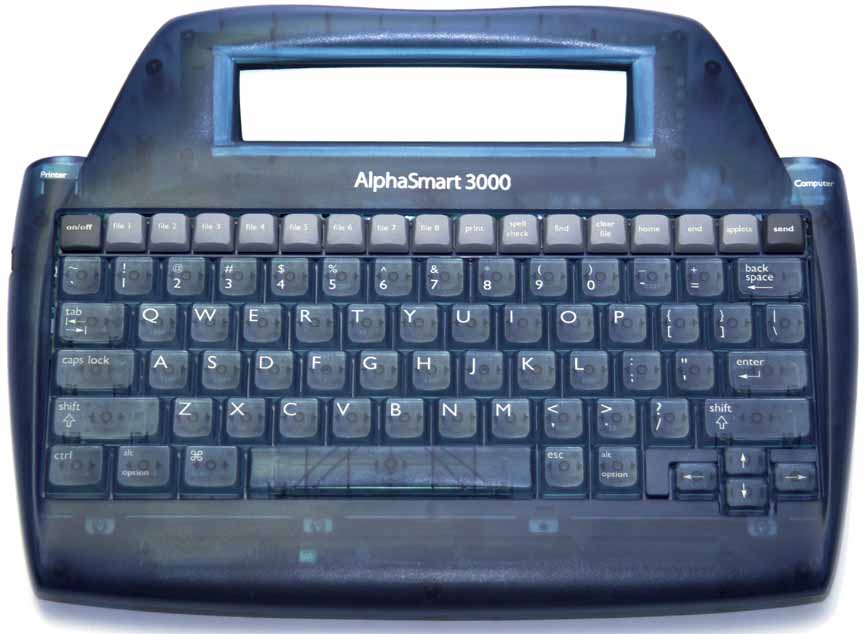
This stupid AlphaSmart has eliminated
 most of my excuses—my laptop is
 running updates, my hand hurts
when I write long-hand, we’re camping/there’s 
no electricity, I just need to respond to this 
Facebook post really quick
for not writing in the little spaces of my day.
I also have some really old technology in my arsenal: an AlphaSmart. We had these back in the day when I first started teaching. You can only type on the thing. There’s no clicking. No web surfing. No formatting. No word count checking. You type, then you plug it into your computer, hit “send,” and your words spill out into Word or Scrivener or wherever you designate.

It’s ugly. I get funny looks. But it’s lightweight, take less than a second to boot up, is virtually indestructible, the batteries last eons (maybe literally; I’m on my second year with the same AA’s!), and there’s NO INTERNET.

I have a secret weapon.

Here’s where my tips may become less helpful to you. Because you might not have access this secret weapon. And if you don’t, well, most of my list is a lot harder to do.

What is it? I have a family—a large, extended family—that supports my writing like crazy. Like CRAZY.

My birthday presents consist of things like new slippers (a writer’s “uniform”), gift cards to coffee shops, and starter funds for housecleaners. My family talks up my books everywhere they go. They attend my book events, even when they’ve heard the speech seventeen times. They keep the laundry and the errands and the meals flowing when I have a deadline or go away to events they can’t attend. They listen--without rolling their eyes--as I debate things like, what kind of injuries would a rabbit get, falling out of a clock tower?

Over and over again, they give me their time and encouragement to keep writing. It’s huge. If you have people like this backing you up, well, it makes every “secret” listed above a lot easier to do.

So, yes, there is not a lot of time to write while working full-time at another job and parenting two busy kids, but it can happen. It DOES happen, word by word, day by day…if you decide you want it to.

And you can even do it without magic formulas, nifty tricks, or having your kids eating drive-through every night.

___________
W.H. Beck is an elementary school librarian by day and mystery writer by night. Her website is here: http://www.whbeck.com.

Tuesday, March 5, 2013

Drafting, and the Aftermath

I've been reading more thrillers lately, gathering tips about building plot twists and amping up suspense. But few scenes are as frightening to me as the process of completing a draft of a novel. And the aftermath.

A few weeks ago, I finished a draft. I finished, quite simply, because I had a deadline. I dislike the process of writing first drafts. I'm a huge reviser. But deadlines are my number one motivator. Without a due date, and a person waiting on the other end, and some money on the line, I might just revise the same sentence over and over again. There's nothing like sheer terror of a date glaring at me to make pages pile up.

I finished the draft, and then learned that my editor couldn't get to it for a few more days. I knew it could use another read-through and more work, so I took it with me on my trip to Seattle. I read it over again on my Nook, on the airplane. (I highly recommend uploading your own work to an eReader -- you really see it with fresh eyes). Then I started unraveling a plot tangle -- probably not a wise last-minute maneuver -- and ended up pulling a couple of late nights, while visiting my family, to fix and patch up the big issues. I finally sent in the manuscript, which is now in the hands of my capable editor.

Then I came home to face this horror.

I was hoping it had cleaned itself in my absence. No luck. This is an aerial view of my office, or one corner of it. You can see reference materials, notes, a white board with calendar boxes for keeping track of a timeline, and my favorite tool of the trade: post-it notes.
Here's the desk itself:

Lots of notes. More post-it notes, creeping up the walls and onto the art print and onto a photo of my son. A visual timer -- I try to work in 30-minute bursts (at least to jump start a sluggish writing session). A summons for Jury Duty -- can't remember if I dealt with postponing that or not. And my trusty iPod, which I used to replay the same three songs over and over when I got stuck or needed to block household noise.

Oh, here's a closeup of the iPod:

(Yes, I know it's from 2006, and I know this was the type that was recalled. Don't judge).

The office pictures and the iPod capture what happens to me when I'm drafting, when I'm into a story far enough to know I'm going to see it through. Aside from my family, the novel takes over. Priorities sharpen, fast, as I become increasingly greedy for desk time. Untangle that iPod cord knot? No way -- I have plot knots to untangle, ones worse than that. Straighten those papers? Not gonna happen. I know vaguely where things landed and can find my notes if I need them. Answer that jury duty summons? Sorry, Commonwealth of Massachusetts, you lose! I have to finish this novel!

While drafting toward the finish, I try to pare down my life to the basic essentials -- and admittedly, this is very hard when you have a family. (And even when you don't!) Every day became a challenge of finding corners to cut. I didn't do any unnecessary errands. Response time to emails and phone calls lagged. I didn't watch TV. Downton Abbey Season 3 ended (which is fine by me, since I've missed Seasons 1, 2, and 3), but while my family was alternately cheering and sobbing over it in the other room, I was toiling away the computer, trying to hammer out own story's highs and lows.

I don't always get the desk time I need -- especially when my son misses school for a cold or snow days, which happened several times during my push to finish this draft -- so I jot notes and ideas when I can, where I can. On napkins and papertowels. Here's my husband's grocery list on our kitchen whiteboard, infiltrated by crazed brainstorming:


There were some things that really kept me going through this draft, though. Among them were:

1. My family. My husband is a great sounding board for ideas, and he patiently listened to wild plot points and character developments -- without knowing completely what the book is about -- at all hours of the day, sometimes even before he'd had a sip of morning coffee. And my parents spent my birthday dinner with me talking only about a big plot issue and offering their insights from the business world, which helped me immeasurably.

2. My writing friends. My in-person writing group looked at pages in progress, cheered me on, and pulled me back from cliffs. A fellow sleuth on this blog, Laura Ellen, did daily/weekly word count check-ins with me, which was highly motivating, especially as we wrote our way through the holidays. And another writer friend had the same deadline, so we did check-ins too. I've never been so grateful for social media as a psychological lifeline.

3. Mental breaks. I tried not to burn out, even as I worked some very late nights. I took full breaks every so often to play with my kid, or pet the cat, or have a cup of tea.

4. My first book. I kept reminding myself that I'd done this before and could do it again. When I'd hit a certain page number, I'd go back and peek at that same page in the published book, as a reward, and remember what it felt like to get there too.

5. Expert help. I have consulted a number of experts in the past few weeks, including mechanics, lawyers, police detectives, port authority workers and shipping container manufacturers. They saved me hours of online research with their fast responses to my crazy questions. I didn't have to waste 50 pages on a misguided plot development if what I was proposing wasn't even remotely plausible. And often, the expert suggested plot developments that were entirely plausible -- but that I wouldn't have thought of because they were out of my area of expertise.

If you are in the midst of a draft, I am here to remind you it is possible to finish! Keep going! Decide it is time to finish, and do so! I have a post-it note on my office door -- "The only way out is through" -- and I live by that. Get through it. You can.

I had many desperate moments where I doubted myself and thought I could not do it, but in the end, I got that stack of pages I'd yearned for:
And now I guess I'd better start digging out my office before my editorial letter comes and the revision process begins. Stock up on some more post-it notes.

Oh, yes. And respond to that jury duty summons, my civic obligation!

For more tips on getting through a first draft -- and to learn about my three favorite tools for drafting -- you can swing by my personal blog: http://dianarenn.blogspot.com/.

*****************************************************************************

Diana Renn grew up in Seattle and now lives outside of Boston with her husband and young son. TOKYO HEIST (Viking/Penguin, June 2012) is her first novel. Her next YA mystery, LATITUDE ZERO (see ultrasound, above) will be published by Viking in 2014.



Tuesday, January 15, 2013

Demystifying Writing

One of the greatest mysteries I've struggled with as a writer is the mystery of my own darned writing process. How do snatches of conversation, fleeting glimpses of characters, and vague themes find their way to the page? How do the pages stack up? Panic: How on earth did I manage to write and publish an entire book? Is it even possible to do it again?

When I romanticize the writing process, thinking of it as something mystical and beyond me, I end up shuffling around the house, nursing endless cups of coffee, wondering things: When will these characters come to life? When will my random ideas cohere? Am are writing two different books -- or three? Or one? Are my plot problems even fixable? Will the solutions come to me in a dream, or if I walk around the block, or if I take another shower?

Then I wonder, at the end of the day, why the pages are not stacking up. And at the end of the day I'm paralyzed by self-doubt. Having Not Written.

As I am now deep in the writing of my second novel, staring down the barrel of a deadline, I've come to realize something. The only way I get any real writing done is when I stop being mystified by it. I have to understand my most productive work habits and take advantage of them. Mostly, I have to sit down at the desk and just get the work done. Instead of wondering how it's all going to happen, I have to make it happen.

I used to agonize over whether to bang out a whole draft and then revise (at the risk of scrapping hundreds of pages or entire characters), or whether I should outline carefully and write more slowly, revising as I go. I've come to accept that I'm neither a panster nor a plotter. I'm something in between: a puzzler.

My novel-in-progress. (Yep, that's Sponge Bob's eye).
Being a puzzler is like having a handful of puzzle pieces when I begin a project. Unfortunately they're not always the most useful pieces. I might have some sky pieces that don't quite fit, and part of a frame, and one corner, and somebody's eye. But the pieces intrigue me. I write a little, think, fix, brainstorm, write more. Before I know it, I have more pieces to move around: more sky, another corner, the second eye, and whoa, a dog.

And so I've found a middle ground in my writing process, where I draft in bursts of up to thirty pages (over several days). Then I go back and take stock, get information I need, brainstorm more, solve problems, and push the manuscript forward into another thirty-page burst.

Instead of sprinting to the end, I look more carefully at what I have after each writing burst. I go more deeply into scenes. I look for underutilized characters, overlooked objects that could become clues or plot twists. Does a character say "no" when someone asks him an important question or extends an invitation? If I make him say "yes" instead, might that propel me into the next thirty pages? Have I made things too easy for my characters? How can they work harder to get what they want? I also try to check in with my characters' emotions. Are they having any? Will their emotional responses propel the plot forward? Oh look, there's another piece of the puzzle, snapping together. Nice.

It's a tedious process at times. I am a fast writer at heart, and I know I'm capable of banging out up to twenty pages in a day. I want to bang out twenty pages in a day. But when I write recklessly, those pages may not all serve the story, and I may eventually hit a dead end. The slower, puzzling process -- which seems to work better for my plot-intensive mysteries -- means I may only have four or five pages at the end of a day. Yet they are better quality pages, and they set me up for more to come.

I recently reread one of my favorite books on writing craft, and I think it's particularly useful for puzzler-types. This slender but wise book is by Ron Carlson, a favorite writer of mine, and it's called Ron Carlson Writes a Story. It walks you through how he wrote one of his acclaimed short stories ("The Governor's Ball") -- what was going through his mind, how he thought through plot problems, how he dealt with uncertainty. It's also about he avoids distractions and "stays in the room." Reading this guide is like looking over his shoulder as he writes, and it makes me feel less alone in the process.

If you are working on a writing project or planning one, I highly recommend it.

What's your creative process like? Do you have a metaphor or image that explains your process? (Construction? Running? Cooking?) 

Do you have writing or other creative goals in 2013? How will you meet those goals?


Diana Renn grew up in Seattle and now lives outside of Boston with her husband and young son. TOKYO HEIST (Viking/Penguin, published June 2012) is her first novel, and she is hard at work on the next one, which is also a YA mystery.


Related Posts Plugin for WordPress, Blogger...