Showing posts with label Tokyo Heist. Show all posts

Tuesday, September 24, 2013

Creative License: When NOT To Research

Confession: I'm an ex-academic. I languished in a Ph.D. program for years, endlessly researching an uninspired dissertation that I ended up never finishing. My long experiment with graduate school is a story for another post, I guess ("Why Pursuing a Ph.D. Should Be a Calling, Not a Fallback Option During an Economic Recession." Or, "Why You Should Cut Loose Your Safety Net -- Because It's Not So Safe!")

In those years I spent training to be a literary critic and a scholar, I developed a facility for research. That's good, right? Yes. I knew how to find information, and fast.

But I also developed a certain defensiveness.

In grad school, we were always on the defense, fortifying ourselves against professors who probed for intellectual potholes, or opportunistic young colleagues eager to knock down our arguments in a seminar and score a few points for themselves.

Or maybe it wasn't like that at all. Maybe I simply had a luxury of time back then to overthink, and to worry, and this is what sent me scurrying to the library day after day after day.

That need for research eventually carried into my fiction writing. First I wrote historical novels (not published), which might have still been that unwritten dissertation, in new clothes.

Then I wrote a mystery (Tokyo Heist) which centered on worlds that interested me greatly, but that I knew little about, initially: art conservation, the Japanese yakuza, Vincent van Gogh, Japanese woodblock prints, manga . . . if I didn't know about it, I was determined to find out about it and put it in my book!

With all the research I had to do, it's no wonder that book took eight years to write.

That pace is unsustainable, of course, for an aspiring career novelist. So when I had to write my next mystery -- with a book contract and a deadline -- I knew I didn't have the luxury of researching every detail.

For my forthcoming Latitude Zero, I chose a topic a little closer to home for me -- bicycling, a sport that I do -- and a country, Ecuador, where I once lived and worked. However, as I rounded out my main character's world, I realized I still had to do some research. (How do bike mechanics work? How are professional racing teams organized? How has Ecuador changed since I lived there over a decade ago?) But this time, I saved most of my research for after the first draft. I tried to get the story straight before I worried too much about facts. This saved me hours -- maybe weeks or months -- of research that was not needed, research I might have been tempted to shoehorn awkwardly into my plot.

I also found creative freedom in writing this book by letting go of the need to research every last detail myself. I had experts in various fields read the manuscript and vet facts or descriptions that I was worried about.

And a few things, I let go of completely.

I have a scene, for example, where a character is trapped in a shipping container with a whole bunch of bikes. In the past, worried about getting this key scene right, I would have arranged to see a shipping container packed with bikes up close. Not impossible. There's a bike shop here in Boston that packs up containers with bikes to send overseas, and they're always looking for volunteers. I volunteered at an art museum as part of my research for Tokyo Heist, so I thought I would do similar hands-on research with this book.

It wasn't easy. I tried on four separate occasions to get to a bike container load so I could see what it looked like firsthand. Family obligations got in the way every time. I was not a parent when I drafted my first book. Now I am. I don't have the luxury of time to immerse myself in every aspect my main character's worlds, as I had done before.

Beta readers looked at the scene -- and said it was gripping. I finally saw the light. I didn't need to research the life out of that scene. It was enough for me to watch a video of a shipping container bike load, to study some pictures of how the containers were locked, and then go write the scene. Readers were not likely to complain that my portrayal was not realistic. After all, how many people have been locked in a shipping container with 400 bikes? I'm guessing not many. If anyone came forward to accuse me of inaccuracy ("being trapped in a shipping container isn't like that at all!"), they'd be few and far between. So I decided to give myself some creative license and make up the experience myself. And it was fun!

In that spirit, towns in my book -- once real -- were demolished, and rebuilt as fictional entities. This freed me from the need to go out and check road signs and intersections and travel times from point A to point B. And after fruitlessly looking for a charity bike ride that my main characters might embark on, I made one up from scratch, including a route and all the logistics.

I still think research is important. Incorrect facts can pull readers right out of a book. And I still have a fat binder of research that I did for this new book -- and I still ended up venturing into unknown worlds, because I love to explore and to learn. But I've also learned to be more focused, more selective, in my information-gathering. We can let research take over, or become an excuse for not writing. As novelists, we have the license to make up a whole bunch of stuff. We should embrace our creative freedom -- and run from the temptation to over-research!

What about you? Do you tend to do too much research? Too little? How do you find a balance? When in the process do you do your research?

PS . . . have you entered SLEUTHAPALOOZA, our biggest giveaway yet? Help us celebrate our two-year anniversary and enter to win, or help spread the word! 

*****************************************************************************

Diana Renn grew up in Seattle and now lives outside of Boston with her husband and young son. Her first novel, TOKYO HEIST (Viking/Penguin) came out in 2012. Her next YA mystery, LATITUDE ZERO, will be published by Viking in July 2014. She is also the Fiction Editor at YARN (Young Adult Review Network).


Friday, July 27, 2012

Sleuthing in Seattle!

Me and my shadow
Greetings from Seattle!

I'm out here this week taking TOKYO HEIST on the road, as well as tracking down some great bookstores and local mystery reads.

And look what I stumbled across! Seattle Mystery Bookshop, on 1st and Cherry: a mystery-lover's delight!

Actually, I was graciously invited here by the bookstore owner, JB (and yes, the initials are his name; so mysterious and cool!). TOKYO HEIST is one of the staff picks in their kids section, and they had a healthy stack of them for me to sign.

This store has warrens of shelves bursting with mysteries, their own crime scene tape (I love that), and a cool chalk outline of a human form splayed out on the ground. (Don't ask).
Blogging in the hot seat!
I got to meet JB in person, as well as booksellers Adele and Amber. Amber is the YA reader for the store, and she wrote a glowing review of TOKYO HEIST a few months ago.You will not find a person on earth who knows kids mysteries as well as Amber. I could have hung out all day talking about mysteries with her and my Penguin sales rep, learning more about new and forthcoming mystery titles. She has her finger on the pulse!

I almost did hang out all day because after I signed their stock, and then signed their big white book of visiting authors (wow!), I got dragged invited over to their computer and ordered at gunpoint politely asked to blog on the fly. Yeah, no pressure, right? Gulp. Anyway, you can read what I wrote for their bookstore blog right here!

I left this store sweating from the spontaneous blogging, but totally energized from my visit. Mystery for teens and tweens is thriving, folks. This store has a swelling bookshelf full of new titles (see right). Teens wandered into the store to browse.

Check them out online for great reviews, book lists, and breaking news. Oh . . and did you know you can avoid big online retailers, support a great local mystery bookstore, and buy online from this place? They make it very easy!

Three cheers for Seattle Mystery Bookshop! And three cheers for middle grade and young adult mystery!

(I know, that's six cheers total, lots of cheering. Now go drink some water).

Let me remind you that our ARC giveaway of Nikki Loftin's THE SINISTER SWEETNESS OF SPLENDID ACADEMY (a great middle grade mystery debut) is on for three more days. If you missed our Interrogation Room interview with Nikki earlier this week, you can find it here, as well as the Rafflecopter thingie for the giveaway. I will sign off with a mystery photo to mull over, taken on location here in Seattle. Can you guess what it is?


It's the Mickey Mouse Pancake Special, complete with old bacon and swollen blueberries, served up at a sleazy bar near our hotel, which happens to serve some semblance of breakfast. The biggest mystery I'm grappling with now is why I actually fed this to my child!

Thursday, June 14, 2012

Interrogation Room Suspect #15: Diana Renn


Tokyo Heist (Viking/Penguin) is out today, so we we've hauled our fellow sleuth Diana Renn into the interrogation room. Tokyo Heist has gotten amazing reviews from the L.A. Times, Kirkus and School Library Journal and it's also made the Summer 2012 Kids' Indie Next List. Go, Diana!

About Diana Renn
Diana grew up in Seattle and now lives in Boston with her husband and son. She graduated from Hampshire College and earned an MA in English and American Literature from Brandeis University. She has taught ESL, writing and literature and has authored several ESL textbooks. She also writes short stories and essays, and enjoys travel, bicycling and taiko drumming.

About TOKYO HEIST
When sixteen-year-old Violet agrees to spend the summer with her father, an up-and-coming artist in Seattle, she has no idea what she's walking into. Her father's newest clients, the Yamada family, are the victims of a high-profile art robbery: van Gogh sketches have been stolen from their home, and, until they can produce the corresponding painting, everyone's lives are in danger—including Violet's and her father's. Violet's search for the missing van Gogh takes her from the Seattle Art Museum, to the yakuza-infested streets of Tokyo, to a secluded inn in Kyoto. As the mystery thickens, Violet's not sure whom she can trust. But she knows one thing: she has to solve the mystery—before it's too late.

It's tough to interrogate the queen of the interrogators but we did, thankfully, manage to get some information out of her without having to resort to our sneakier tactics.

Elisa Ludwig: Violet is a great heroine—she's smart and curious but also very believable as a teen. How did this character come to you? Was her voice simply in your head or did she come into focus more gradually over time?

Diana Renn: Thank you! When I started writing, it was an adult novel, narrated by a thirtysomething Violet, with a parallel narrative about her teen self in Japan. The younger Violet was more fun to write. I heard her voice like a radio signal. I started over with the younger narrator, and was happily surprised to find I was now writing YA.

While Violet’s teen voice took awhile, I started the novel with an image of her. When I was in Japan, I saw an American girl at a summer festival, wearing a summer kimono and combat boots. She haunted me. I wondered about this girl who was straddling cultures and what her story was.

Elisa: You have written about how your setting chose you, but how did the ultimate choice to set a mystery in Japan inform the writing process? What were the challenges of this particular setting and what aspects made your job easier?

Diana: One challenge was letting go of my travel itinerary and memories from Japan. It was tempting to include every cool place, experience, or person I encountered, and it took many false starts to realize that my story needed to go its own way. I can’t tell you how many months I spent trying to figure out how to get my sleuth and her sidekick to a remote mountain town where people used to farm silkworms. Why? It was going to take them on a fifty-page detour to a dead end. My book has nothing to do with silkworms. Everything they needed to accomplish could be done in other cities and towns. So cutting loose my travel experiences was hard at first, but once I did, the writing got easier.

Initially, I was worried about setting the novel in Japan knowing I could not return there for research. When I needed to fact check or get ideas, I turned to travel guidebooks, the Internet, Japanese friends, books. And YouTube. Tourist videos on YouTube made my job so much easier. Instantly I could recall what it was like to board the shinkansen, or walk through a department store, or lay out a futon on a tatami mat in an inn. Thanks to videos, I could either remember details or gather new details to bring scenes to life.

Elisa: An art heist is a special kind of mystery with its own set of clues and investigative techniques—what sort of research did you do to get the details right? How did the mystery itself evolve through drafts?

Diana: I’m totally fascinated by what happens when art enters the marketplace and becomes a kind of currency. That fascination extends to art heists. Art heists are incredibly complex. They are also underreported. Museums and galleries don’t really like to talk about them, for fear of exposing their vulnerabilities to crime. There are, however, many books and documentaries on this topic, many of which I consulted.

I’m obsessed with the Isabella Stuart Gardner Museum heist that happened in the 1990s here in Boston. I studied that heist a lot to understand the types of people who might steal art, who might ferry or harbor stolen art to a buyer, and who might be motivated to find it. I contacted the FBI, the Seattle Police, and various other law enforcement officials to find out how they would go about investigating the type of crime(s) involved in my novel.

Despite all the research, it took a lot of revisions to nail the criminals, investigators, and motives in my story. The research and writing were always going on simultaneously. The story development led to questions I needed to answer with research. The research in turn affected the story development. Characters were added and subtracted as needed.

Elisa: Violet is less than satisfied with her parents and their involvement in her life and the way she learns to forge a better relationship with them is a wonderful subplot in the story. You did such a great job balancing this emotional arc with the action of the story—what is your advice to other mystery writers who might want to create richer characters and relationships in their narratives?

Diana: Thank you! Balancing the emotional arc and the mystery plot was a challenge. In early drafts, the two arcs were competing, or confusing. Beta readers weren’t sure if it was a contemporary, character-driven story or a true mystery. Eventually I chose to foreground the mystery without sacrificing the emotional arc. What really helped in the end was crafting scenes that could do “double duty” – conveying character development and furthering the mystery plot at the same time. For example, in early drafts I might have a scene where Violet finds some clues (mystery plot) and a separate scene where Violet confronts her father about some issue (emotional arc). In subsequent drafts, I was able to combine those scenes, so that Violet might unearth a clue while having it out with her dad or confessing her feelings to someone – or the reveal might lead to an emotional scene — within the same two or three pages. This strategy cut down the word count too.

Later, I created a chapter-by-chapter chart where I tracked the mystery plot and any subplots, coding them in different colors. In that same chart, I wrote out questions I wanted to leave the reader with, regarding both the mystery plot and the emotional developments. Finally, I did lots of journaling from the points of view of my main characters. That helped me get into their voices and characters.

Elisa: What did you learn from the writing of Tokyo Heist that you have taken with you into your subsequent work?
Diana: I’ve learned that I love mystery! I resisted the genre label for a long time, mainly because I feared plot. But I had so much fun putting together this puzzle. Mysteries are difficult to write, but there’s nothing more satisfying to me than those moments when plot points, clues and revelations all suddenly work together, and everything clicks into place.

I’ve learned to be a better planner and think through problems before I write myself into a corner. I’ve learned that charts, timelines, and other graphic organizers can be used at any step of the process. I’ve learned that the mystery has to be introduced early on – ideally in the first ten pages, and definitely in the first twenty.

Above all, I’ve learned that mystery demands clarity. This is key. A mysterious, atmospheric, ambiguous story is NOT a mystery. As the author, you have to know who did what, and when, and where, and why – maybe not all of that when you begin, but at some point. You have to know what the effects of a crime are and how they will ripple through the entire book. You have to be able to separate the clues and red herrings, and put the right weight on each, and plant them. Then you have to wipe away your fingerprints and your footprints for the reader.

Elisa: This is a book that could appeal to so many different types of readers: mystery buffs, manga fans, art aficionados, anyone curious about Japan and Japanese culture. Who do you envision as an ideal reader for Tokyo Heist?

Diana: I do hope the book appeals to these various readers – though those weren’t groups I had in mind when I wrote. I wrote for a teen girl who was introverted and creative, who made sense of the world through some kind of art, and who needed to discover her inner strength and resources.

Elisa: What are some of your influences, literary and otherwise? 

Diana: These days I read a lot of contemporary fiction, both YA and adult. I’m reading more mysteries than ever. In YA mystery, Peter Abrahams and Alane Ferguson are two favorite authors of mine. I also love John Green, for the voice and the intelligence of his young characters. I love authors who introduce me to other places and cultures. Laura Resau is a favorite YA/MG author of mine – she writes such rich stories with global settings, places I’m dying to visit (and a dash of mystery, too!)

I also really love art as a source of inspiration. I poke around in art galleries and museums as often as I can. (I swear I’m not plotting a heist of my own!) Exploring a different medium always triggers new ideas for me.

Elisa: What is your writing process like? Pantser or plotter? When do you prefer to work, and how do you stay focused?

Diana: My writing process is strange. I sketch out ideas in rough outline form. I try to write 30-50 pages. I reevaluate and sketch out more ideas. I revise and push out 30-50 pages more. And so on. I seem to write deeper into the story as I go, while pushing the length out little by little. So I’m a combination of pantser and plotter, I guess.

When drafting new material, I prefer to work at night when my family is asleep, outside fades away, and I have a stretch of uninterrupted time. I pay for it the next day with fatigue, but if I can stay alert from nine till midnight, I can get some good, workable material. During the cold light of day I can then edit and plan the next chapters. As for staying focused, I watch almost no TV – I purposely don’t get wrapped up in series dramas, since those characters will then take over my mind and my creative energy. Also, I swear by internet blocking software; I use “Freedom.”

Elisa: What's next from you?

Diana: I’m working on a new YA mystery (unrelated to Tokyo Heist). I tend not to talk about works in progress until they’re ready to face the world, so that’s about all I can say right now.

Elisa: Do you have anything else to confess?

Diana: Yes. I can’t write in a cafĂ© at all – too distracting – but the physical prototype for one of my characters works at my local Starbucks. I drank a TON of coffee there over the years while stalking studying this person, and spent God knows how much money on frequent coffee breaks. Now, when I get my occasional latte, I see him and smile to myself – he’s aged out of the YA market, beyond the age of my character, and he has no clue was used as a model!

Tuesday, June 12, 2012

The Art of the Heist

Who doesn't love a great heist?  The heist is often used as a setpiece in movies and books.  Sometimes the story centers around solving the crime, other times the plot might revolve around planning for and then attempting to pull it off.  As we celebrate the launch of detective Diana Renn's debut,Tokyo Heist, I thought I would give you my list of what makes heist stories so much fun.

1. Bad Guys We Love to Hate (or just love to love):  With heists, the thieves are often  glamorized, portrayed as handsome, rich, and of course, having impeccable taste.  Think George Clooney (Oceans 11), Robert Redford (Sneakers) and Timothy Dalton (The Thomas Crown Affair).  In heist stories, the thief can be a kind of anti-hero, a charming rogue who has enough redeeming qualities to keep the audience firmly in their camp.  Or just a charming rogue.


2. Pretty Things:  Priceless art is often the object of a heist, and it can be fun to learn about priceless works of art even as you are breathlessly held in suspense.

3.  Complex Problems:  A heist usually requires an elaborate plan.  Priceless art is protected by several layers of security, and it's fun to discover how the heist was or will be accomplished.  And what happens to the art after the theft?  Priceless artwork is usually very recognizable.  How is it then sold or kept on the black market?

4.  A fun cast of characters:  Heists rarely can be accomplished by a single person.  The joy of a heist story is often in the characters.  Heists are usually undertaken or investigated by a team, and there is lots of room for colorful sidekicks and comic relief. 

5.  A fast-paced plot:  Heist stories naturally lend themselves to great pacing and suspense.  Finding out how the heist is pulled off is always a blast, but the stakes are often raised even higher, with characters' lives or futures dependent on the results.

6.  Gorgeous settings:  think castles, estates, museums, and grand homes in the European countryside, a cosmopolitan city or a corporate compound. 

Tokyo Heist has all the elements of a fantastic heist: the story involves the theft of priceless Van Gogh sketches (pretty things), but the stakes are raised higher still, as Violet must find the corresponding painting before she or her family are hurt or killed (fast-paced plot and complex problem). Throw in a gorgeous setting (Japan), and a character who uses Manga to help her navigate both a mystery and a foreign country (fun characters) and you have all the ingredients for a great book!

Well, except for George Clooney.  But hopefully Diana is working on that for the next one. 

Our Tokyo Heist / Malcolm at Midnight giveaway continues all week! Click here to see the giveaway info and to enter!

Monday, June 11, 2012

TOKYO HEIST Celebration Week!

We here at Sleuths, Spies and Alibis are thrilled to celebrate the release of TOKYO HEIST by our fearless detective-leader, Diana Renn. This week we will be talking about Diana's fabulous YA mystery, starting today with an amazing giveaway.

TOKYO HEIST is about a summer vacation that takes an adventuresome turn. So now it's your turn: We want to know all about your best and worst summer vacations ever.

Answer in the comments below for a chance to win a signed copy of TOKYO HEIST and a TOKYO HEIST swag bundle (bookmarks, stickers and special crime scene tape!) or a signed ARC of the MG mystery MALCOLM AT MIDNIGHT by detective W.H. Beck. Tweet about the giveaway, follow us or add TOKYO HEIST to Goodreads for more chances to win!

a Rafflecopter giveaway

Wednesday, April 25, 2012

Under Cover #11


Time to check in and see what our detectives are reading!


Diana Renn: I recently read CROAK by the wickedly funny Gina Damico. This is a dark comedy about a wild teen who gets shipped off to upstate NY to spend the summer with her Uncle Mort and get her act together on a farm. Instead she gets sucked into learning the family business: being a Grim Reaper. Turns out this is a town full of reapers, and she falls in with a crew of apprentices. Within this unique premise is a mystery! Because when people start dying who aren't supposed to, and it's up to this unusual sleuth to track down the killer. A unique story, a wild ride, and the first in a planned series; part 2, SCORCH, comes out in September. 


Laura Ellen: I had the honor of reading an advance reading copy of Tokyo Heist by SS&A's own Diana Renn, and I absolutely loved it. It had a little bit of everything: mystery, danger, romance, self-discovery -- even manga! I really loved Violet's spunk and how she met the challenge of solving the mystery even when she knew it was dangerous and despite her own uncertainties about where she fit in. I definitely recommend this fast-paced YA when it debuts June 14th!

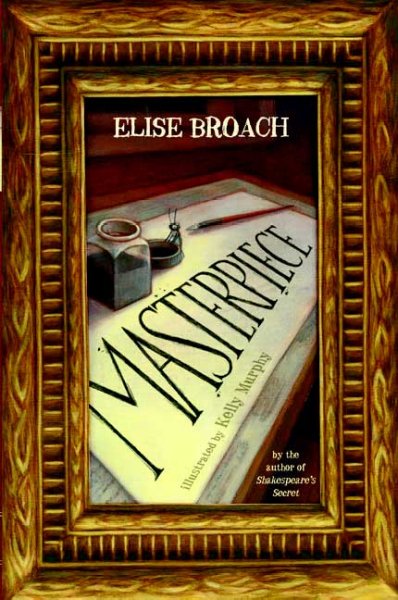
Kristen Kittscher: After enjoying Elise Broach's Shakespeare's Secret so much, I decided I hadn't had quite enough and promptly dove into her aptly titled middle grade mystery Masterpiece. The tale of an unlikely, touching friendship between a beetle and a boy who find themselves at the center of an art heist at The Metropolitan Museum of Art, Masterpiece has a few more twists and turns and tighter pacing than Shakespeare's Secret but has just as much heart. I read this through in a single sitting, and thoroughly enjoyed it. I'm not at all surprised that this one the E.B. White Read-Aloud award in 2009. It has the feel of a classic!

Thursday, March 1, 2012

Writing DNA #9: Using Lore, Legends, and Superstitions

Photo by Jasmaine Mathews
It's March -- a month full of Blarney Stones, four-leaf clovers, leprechauns, the Luck of the Irish, and let's not forget, Beware the Ides of March! With a month so full of lore, legend, and superstition, we thought we'd talk a little about the part such things play -- or doesn't -- in our own writing.

Laura Ellen: Kids love  magic and curses and legends; they want to believe there are things that exist beyond what we can see and feel. Naturally, then, you find many a mystery shrouded in these very things. Superstitions, curses, and legends do make awesome springboards for mysteries. They add that extra element of intrigue and unknown that immediately draw readers into a mystery. But they can also be tricky because the author must decide if the story is going to be anchored in reality -- in which case the curse or magic will have to be explained away at some point -- or if the story will indeed have that element of magic -- in which case the author must build a world that is not our own and yet still makes sense. Of course, a story can have a little bit of both like many urban fantasies do, but the author still must walk that fine line between real and fantasy, deciding what to explain away and what to keep as magical. Myself, I love the unknown, the hint that there may be something out there beyond ourselves, but I am also a very contemporary writer, always keeping my plots and characters firmly footed in reality. So while I may use a legend or a superstition as a tool to amp the tension and fear,  the outcome of the plot won't rely on the existance of that legend or superstition. (Well, so far I haven't anyway; I suppose there is always a chance, right?)

Diana Renn: Like Laura's, my fiction is contemporary and grounded in reality, but I am drawn to the unknown. In very early drafts of Tokyo Heist, I had a ghostly figure -- OK, a ghost -- but eventually I had to accept that using the ghost would require all kinds of significant changes to support its mere existence. (Or non-existence, I suppose). He only had a cameo appearance, so it wasn't worth all that. Yet I let myself be haunted by this ghostly presence, rather than my character, and he whispered all kinds of good ideas in my ear. It was useful to think of an angry figure from the past and what he might want to see happen or not happen in the story. However, I did tiptoe into the realm of superstition and luck: I have a fortune that crops up in the novel, which the main character receives at a shrine. Its maddening ambiguity (does it foretell, in its broken English, good luck or bad?) led me to a fun plot twist, so I'm glad I had the good fortune to think of playing with a superstitious device. Even if you don't use real magic in your story, a character can wrestle with the concepts of superstition, curses, legends, and luck, and send your story in surprising directions.

W.H. Beck: I don't have a curse or a legend in my novel, MALCOLM AT MIDNIGHT, but I do have a couple of sayings that haunt the Midnight Academy (the secret society of classroom pets). However, I'm embarrassed to say how long it took me to come up with them! I Googled. I searched. I browsed quote books. But nothing I came across conveyed the feeling I was looking for about midnight. Then, all of the sudden, one day it hit me: I was writing fiction. Duh. I COULD MAKE IT UP. And so I did. :-)

L.R. Giles: I used to have dreams of being a horror writer because I grew up on all manor of ghosts, ghouls, and monsters. The more I read and researched things that go bump in the night, I discovered many stories were rooted in legends and superstitions dating back to, heck, the beginning of time. Looking into the legends/superstitions themselves, I found that they were often the result of ancient storytellers trying to make sense of a world they didn't understand. It was their (albeit faulty) way of solving life's mysteries. Now, in terms of my mysteries, I look at legends/superstitions as inspirational gold mines. The same way ancients used legends to explain the things around them, I can use them to explain the world my characters live in, give them some quirky motivations. I don't go to legends/superstitions every time, but I am working on something right now that is heavily driven by an old tale that goes like this: If you say "Rabbit, Rabbit" on the first day of a month--before you speak any other words--you'll have a month of good luck, but, if you don't say it, your luck goes the other way. When this blog posting goes live, it will be the first day of March. Hmmmm, Rabbit, Rabbit.

Elisa Ludwig: Like many writers I'm pretty superstitious about the conditions I need to be productive. It's never terribly outlandish but I do need a good seat, usually in a cafe, with strong coffee, and my screen facing away from where anyone else can see it. Some cafes are better than others but there's one that I prefer the most. With the particular piece of writing I'm working on now, I have also become addicted to a specific soundtrack of German minimalist music. And when I'm at home, I need my lucky metal pinecone on my desk—it was given to me by a writing teacher in college.

Kristen Kittscher: I didn’t weave any superstitions or curses into the plot of my middle-grade mystery/comedy THE WIG IN THE WINDOW. However, my white main character’s overenthusiastic appropriation of Chinese cultural traditions plays itself out in ways some might interpret as superstition. Much to the annoyance of her Chinese-American best friend and fellow sleuth, Sophie Young arranges her room in accordance to feng shui principles, consults the I Ching, and wishes her parents would let her place fu dogs at their front door to guard against evil chi. Though Sophie’s zeal provides comic relief and is a source of tension in the sleuths’ friendship, it’s also symptomatic of her desire for greater control over her circumstances. As I researched feng shui principles, I couldn’t help but soak them up: when a writing challenge stymied  me, you bet I’d make sure to face west and enhance the “creativity” sector of my room. In addition, when I am writing I also always keep nearby a tiny pewter medieval knight that my best friend gave me when I sold THE WIG IN THE WINDOW. Her late father, a writer and scholar I respected very much, always kept it with him on his desk as a reminder to charge ahead with his writing adventures. It’s now one of my dearest possessions.
Related Posts Plugin for WordPress, Blogger...