Showing posts with label Interview. Show all posts

Thursday, June 14, 2012

Interrogation Room Suspect #15: Diana Renn


Tokyo Heist (Viking/Penguin) is out today, so we we've hauled our fellow sleuth Diana Renn into the interrogation room. Tokyo Heist has gotten amazing reviews from the L.A. Times, Kirkus and School Library Journal and it's also made the Summer 2012 Kids' Indie Next List. Go, Diana!

About Diana Renn
Diana grew up in Seattle and now lives in Boston with her husband and son. She graduated from Hampshire College and earned an MA in English and American Literature from Brandeis University. She has taught ESL, writing and literature and has authored several ESL textbooks. She also writes short stories and essays, and enjoys travel, bicycling and taiko drumming.

About TOKYO HEIST
When sixteen-year-old Violet agrees to spend the summer with her father, an up-and-coming artist in Seattle, she has no idea what she's walking into. Her father's newest clients, the Yamada family, are the victims of a high-profile art robbery: van Gogh sketches have been stolen from their home, and, until they can produce the corresponding painting, everyone's lives are in danger—including Violet's and her father's. Violet's search for the missing van Gogh takes her from the Seattle Art Museum, to the yakuza-infested streets of Tokyo, to a secluded inn in Kyoto. As the mystery thickens, Violet's not sure whom she can trust. But she knows one thing: she has to solve the mystery—before it's too late.

It's tough to interrogate the queen of the interrogators but we did, thankfully, manage to get some information out of her without having to resort to our sneakier tactics.

Elisa Ludwig: Violet is a great heroine—she's smart and curious but also very believable as a teen. How did this character come to you? Was her voice simply in your head or did she come into focus more gradually over time?

Diana Renn: Thank you! When I started writing, it was an adult novel, narrated by a thirtysomething Violet, with a parallel narrative about her teen self in Japan. The younger Violet was more fun to write. I heard her voice like a radio signal. I started over with the younger narrator, and was happily surprised to find I was now writing YA.

While Violet’s teen voice took awhile, I started the novel with an image of her. When I was in Japan, I saw an American girl at a summer festival, wearing a summer kimono and combat boots. She haunted me. I wondered about this girl who was straddling cultures and what her story was.

Elisa: You have written about how your setting chose you, but how did the ultimate choice to set a mystery in Japan inform the writing process? What were the challenges of this particular setting and what aspects made your job easier?

Diana: One challenge was letting go of my travel itinerary and memories from Japan. It was tempting to include every cool place, experience, or person I encountered, and it took many false starts to realize that my story needed to go its own way. I can’t tell you how many months I spent trying to figure out how to get my sleuth and her sidekick to a remote mountain town where people used to farm silkworms. Why? It was going to take them on a fifty-page detour to a dead end. My book has nothing to do with silkworms. Everything they needed to accomplish could be done in other cities and towns. So cutting loose my travel experiences was hard at first, but once I did, the writing got easier.

Initially, I was worried about setting the novel in Japan knowing I could not return there for research. When I needed to fact check or get ideas, I turned to travel guidebooks, the Internet, Japanese friends, books. And YouTube. Tourist videos on YouTube made my job so much easier. Instantly I could recall what it was like to board the shinkansen, or walk through a department store, or lay out a futon on a tatami mat in an inn. Thanks to videos, I could either remember details or gather new details to bring scenes to life.

Elisa: An art heist is a special kind of mystery with its own set of clues and investigative techniques—what sort of research did you do to get the details right? How did the mystery itself evolve through drafts?

Diana: I’m totally fascinated by what happens when art enters the marketplace and becomes a kind of currency. That fascination extends to art heists. Art heists are incredibly complex. They are also underreported. Museums and galleries don’t really like to talk about them, for fear of exposing their vulnerabilities to crime. There are, however, many books and documentaries on this topic, many of which I consulted.

I’m obsessed with the Isabella Stuart Gardner Museum heist that happened in the 1990s here in Boston. I studied that heist a lot to understand the types of people who might steal art, who might ferry or harbor stolen art to a buyer, and who might be motivated to find it. I contacted the FBI, the Seattle Police, and various other law enforcement officials to find out how they would go about investigating the type of crime(s) involved in my novel.

Despite all the research, it took a lot of revisions to nail the criminals, investigators, and motives in my story. The research and writing were always going on simultaneously. The story development led to questions I needed to answer with research. The research in turn affected the story development. Characters were added and subtracted as needed.

Elisa: Violet is less than satisfied with her parents and their involvement in her life and the way she learns to forge a better relationship with them is a wonderful subplot in the story. You did such a great job balancing this emotional arc with the action of the story—what is your advice to other mystery writers who might want to create richer characters and relationships in their narratives?

Diana: Thank you! Balancing the emotional arc and the mystery plot was a challenge. In early drafts, the two arcs were competing, or confusing. Beta readers weren’t sure if it was a contemporary, character-driven story or a true mystery. Eventually I chose to foreground the mystery without sacrificing the emotional arc. What really helped in the end was crafting scenes that could do “double duty” – conveying character development and furthering the mystery plot at the same time. For example, in early drafts I might have a scene where Violet finds some clues (mystery plot) and a separate scene where Violet confronts her father about some issue (emotional arc). In subsequent drafts, I was able to combine those scenes, so that Violet might unearth a clue while having it out with her dad or confessing her feelings to someone – or the reveal might lead to an emotional scene — within the same two or three pages. This strategy cut down the word count too.

Later, I created a chapter-by-chapter chart where I tracked the mystery plot and any subplots, coding them in different colors. In that same chart, I wrote out questions I wanted to leave the reader with, regarding both the mystery plot and the emotional developments. Finally, I did lots of journaling from the points of view of my main characters. That helped me get into their voices and characters.

Elisa: What did you learn from the writing of Tokyo Heist that you have taken with you into your subsequent work?
Diana: I’ve learned that I love mystery! I resisted the genre label for a long time, mainly because I feared plot. But I had so much fun putting together this puzzle. Mysteries are difficult to write, but there’s nothing more satisfying to me than those moments when plot points, clues and revelations all suddenly work together, and everything clicks into place.

I’ve learned to be a better planner and think through problems before I write myself into a corner. I’ve learned that charts, timelines, and other graphic organizers can be used at any step of the process. I’ve learned that the mystery has to be introduced early on – ideally in the first ten pages, and definitely in the first twenty.

Above all, I’ve learned that mystery demands clarity. This is key. A mysterious, atmospheric, ambiguous story is NOT a mystery. As the author, you have to know who did what, and when, and where, and why – maybe not all of that when you begin, but at some point. You have to know what the effects of a crime are and how they will ripple through the entire book. You have to be able to separate the clues and red herrings, and put the right weight on each, and plant them. Then you have to wipe away your fingerprints and your footprints for the reader.

Elisa: This is a book that could appeal to so many different types of readers: mystery buffs, manga fans, art aficionados, anyone curious about Japan and Japanese culture. Who do you envision as an ideal reader for Tokyo Heist?

Diana: I do hope the book appeals to these various readers – though those weren’t groups I had in mind when I wrote. I wrote for a teen girl who was introverted and creative, who made sense of the world through some kind of art, and who needed to discover her inner strength and resources.

Elisa: What are some of your influences, literary and otherwise? 

Diana: These days I read a lot of contemporary fiction, both YA and adult. I’m reading more mysteries than ever. In YA mystery, Peter Abrahams and Alane Ferguson are two favorite authors of mine. I also love John Green, for the voice and the intelligence of his young characters. I love authors who introduce me to other places and cultures. Laura Resau is a favorite YA/MG author of mine – she writes such rich stories with global settings, places I’m dying to visit (and a dash of mystery, too!)

I also really love art as a source of inspiration. I poke around in art galleries and museums as often as I can. (I swear I’m not plotting a heist of my own!) Exploring a different medium always triggers new ideas for me.

Elisa: What is your writing process like? Pantser or plotter? When do you prefer to work, and how do you stay focused?

Diana: My writing process is strange. I sketch out ideas in rough outline form. I try to write 30-50 pages. I reevaluate and sketch out more ideas. I revise and push out 30-50 pages more. And so on. I seem to write deeper into the story as I go, while pushing the length out little by little. So I’m a combination of pantser and plotter, I guess.

When drafting new material, I prefer to work at night when my family is asleep, outside fades away, and I have a stretch of uninterrupted time. I pay for it the next day with fatigue, but if I can stay alert from nine till midnight, I can get some good, workable material. During the cold light of day I can then edit and plan the next chapters. As for staying focused, I watch almost no TV – I purposely don’t get wrapped up in series dramas, since those characters will then take over my mind and my creative energy. Also, I swear by internet blocking software; I use “Freedom.”

Elisa: What's next from you?

Diana: I’m working on a new YA mystery (unrelated to Tokyo Heist). I tend not to talk about works in progress until they’re ready to face the world, so that’s about all I can say right now.

Elisa: Do you have anything else to confess?

Diana: Yes. I can’t write in a cafĂ© at all – too distracting – but the physical prototype for one of my characters works at my local Starbucks. I drank a TON of coffee there over the years while stalking studying this person, and spent God knows how much money on frequent coffee breaks. Now, when I get my occasional latte, I see him and smile to myself – he’s aged out of the YA market, beyond the age of my character, and he has no clue was used as a model!

Wednesday, May 9, 2012

Interrogation Room #13: Tracy Bilen, author of What She Left Behind

“Don’t even think of leaving…I will find you,” he whispered. “Guaranteed.” - What She Left Behind by Tracy Bilen

Sara and her mom have a plan to finally escape Sara’s abusive father. But when her mom doesn’t show up as expected, Sara’s terrified. Her father says that she’s on a business trip, but Sara knows he’s lying. Her mom is missing—and her dad had something to do with it.


Each day that passes, Sara’s more on edge. Her friends know that something’s wrong, but she won’t endanger anyone else with her secret. And with her dad growing increasingly violent, Sara must figure out what happened to her mom before it’s too late…for them both.

This week we've hauled author Tracy Bilen into the Interrogation Room, accused of being a First Ttime Offender. Her first novel What She Left Behind, a romantic thriller, debuted May 1st from Simon Pulse.

Tracy is a high school French and Spanish teacher in Michigan where she lives with her husband and two children. Before moving to Michigan, Tracy taught at a ski school for high school students in Vermont (Spanish, not skiing!). She studied at the Sorbonne in Paris and taught English in Strasbourg, France. She enjoys cross-country skiing and walks in the woods.

Here is the transcript of Tracy's interrogation:

Laura Ellen: According to your bio, you are a high school French and Spanish teacher. How did you decide to begin writing young adult novels?

Tracy Bilen: I’ve always wanted to be a writer, but I also knew that the road wouldn’t be easy, so I entered college determined to come out with a profession I could use to support myself. Studying French and Spanish was an easy choice, since I love speaking other languages as much as I love writing. When I started writing novels, I wasn’t much beyond my teen years myself. So I started writing with a teen perspective and I never wanted to give it up.

Laura Elen: Were thrillers your intended genre? Going forward, what genres do you see yourself writing?

Tracy Bilen: My first attempt at a novel was a romance, but I’ve always loved reading thrillers…from Lois Duncan as a teen to Harlan Coben, now as an adult. And while What She Left Behind is a thriller, it’s a romance as well. I love both reading and writing romantic thrillers, so I see the genre as my writing “home.”
Laura Elen: You classify What She left Behind as a 'romantic thriller', but it has also been called a  'mystery' by others. Do you see the terms 'thriller' and 'mystery' as interchangeable?

Tracy Bilen: Here’s my take on the two terms: In a mystery, the protagonist usually has a choice about whether or not to try to solve a crime. And while his/her life may be at risk, this normally isn’t evident until near the end. While Sara does have a mystery to solve, I consider What She Left Behind to be a thriller because Sara’s life is in jeopardy from the moment she and her mom decide to run away. 
Laura Ellen: When you began writing What She Left Behind did you know it was going to be a thriller or did it just 'happen' as you got farther into the writing?

Tracy Bilen: I always knew that What She Left Behind would be a thriller, that the novel would be a race against time as Sara searched for her mom.

Laura Ellen: When you write do you plot everything out or do you just let the story take you where it needs to go?
Tracy Bilen: I’m definitely more of a “pantser”than a “plotter.” With What She Left Behind, I knew very little about where the story would go when I started it. One of my critique group partners is a definite “plotter.” About her own work she would say things like, “In chapter 9, such and such will happen.” And I would find that so funny because I could never know something that detailed starting out. That being said, I’ve found that in the manuscripts I’ve worked on since What She Left Behind, I’ve been able to do a lot more of the plotting up front (but I don’t think I’ll ever be able to tell you what will happen in chapter 9 before I write it!)

Laura Ellen: How would you advise mystery and thriller writers to ramp up the "thrill factor"? Do you have any tips for suspense writing?
Tracy Bilen: When your character is in a bad spot, keep asking yourself, how could this get any worse? And then throw your character into that worse situation (and try not to wince!) Also, try to ramp up the suspense at the end of each chapter. Make your reader feel like he/she just has to turn the page to find out what’s going to happen next.

Laura Ellen: What She Left Behind deals with two very difficult issues -- grief and abuse -- how difficult was it to inject these into your story and still keep it a fast-paced, suspenseful thriller?

Tracy Bilen: Writing these parts was not difficult because that was the way the story unfolded in my mind. That being said, I did have to go back through and crank up the suspense in certain scenes.

Laura Ellen: Was there ever a time in writing What She Left Behind that you felt it was too dark/edgy and you had to pull back?

Tracy Bilen: Yes, there was one scene in particular that I was struggling with and I wrote it the direction I thought my editor wanted it to go. But I also wrote an alternate version of the scene that I was much happier with, and as it turned out, so was my editor!

Laura Ellen: I understand you won the SCBWI-MI novel mentorship for 2009 which meant a year working on What She Left Behind one-on-one with author Shutta Crum. How did this mentorship push you from manuscript to published novel? What were some of the key lessons you learned through this experience?

Tracy Bilen: When I started the mentorship, I had about half of the novel written. In something akin to an editorial letter, Shutta gave me detailed suggestions about how and where to expand the novel. She did this five times throughout the year, and by the end, the novel was ready to make the rounds with agents. One of the things we worked the most on was characterization and character arc. These were weaknesses that I wasn’t even aware of when I began the mentorship, and I’m so grateful I had the chance to grow in this area!

Laura Ellen: Thank you for your time, Tracy. We hope to see you again soon as a repeat offender. Before you go, where can we find you if we need to ask you more questions?

Tracy Bilen: If you want to know a little more about What She Left Behind, you can watch the trailer here. You can also head over to my website at http://www.tracybilen.com
On Twitter I’m @TracyBilen and on Facebook my page is at: http://www.facebook.com/tracybilenbooks
I am also on Goodreads: http://www.goodreads.com/author/show/4672248.Tracy_Bilen


Click the 'read more' link below to win a What She Left Behind swag pack which includes 1 WSLB notebook and 5 WSLB bookmarks!

Wednesday, December 14, 2011

Interrogation Room Suspect #6: Charlie Price


This week we've hauled in author Charlie Price to face the glare of the Interrogation Room spotlight. He faces questioning from two of our detectives, Elisa Ludwig and Laura Ellen.
Raised in Colorado and Montana, Charlie graduated from Stanford in the late 60s and has lived in Italy, New York City, Oakland, and Mexico before settling in Northern California. From street schools in Bedford-Stuyvesant, to locked psychiatric units, to Academic Dean in a therapeutic boarding school, he has worked with adolescents and adults in trouble since the early seventies. Currently he consults and coaches for public and private agencies.
His fourth book, Desert Angel (Farrar, Straus, & Giroux) came out this past October. His third book, The Interrogation of Gabriel James won the Edgar Award for best YA Mystery last year.
Congratulations on winning the Edgar Award. How did you first find out you'd been nominated? How did you learn you'd won?
My editor advised me in an email that I’d been nominated, and later in the day I heard the same from Mystery Writers of America. I was delightfully surprised and honored. As to winning, no one finds out until the end-of-April banquet in New York. I thought it too expensive to go, but Macmillan wound up bringing me out to NYC for a toast at the Publishing House, and sending my editor Wes Adams and me to the ceremony. At the banquet, when they announced Interrogation the winner, I was flabbergasted. I was very proud of the book but I hadn’t allowed myself to think about actually winning. It was one of those three or four overpowering moments in a life.
Where did the idea for Interrogation come from? Was it always going to be a mystery novel?
I knew that a disturbed family can create serious problems for its community. The story about Raelene’s horrible home life is a true one that I encountered during my psych hospital work. It bothered me for years and I wrote a short story about it. I couldn’t understand how a father could justify such an abusive environment. Finally, I wrote the novel (like play therapy) to better understand how such a situation might occur.
I had also long been troubled by the racism toward Native Americans in some western states. It exactly mimicked racism against other minorities and I wanted to look at how that might play out in a school environment. Billings, Montana, where the novel is set, made a community-wide response to a hate crime toward a Jewish family in 1993 and thereby started the NOT IN OUR TOWN movement which is still being replicated in towns and cities throughout the US.
Most of this book is written in the dialogue-heavy format of the interrogation. How did you decide to tell the story in this particular style?
I wrote the book several times in sequential style from different points of view but it never lifted me off the ground the way I had hoped. One afternoon I was trying to buff a particular passage and an idea came to me: what if I told the two-month tale in a day’s real-time interrogation? The dialogue format was dictated by that style decision. This was a few years ago, before I saw the brilliant Slumdog Millionaire where the story evolves from quiz show questions.
Anyway, I got excited by the idea and flew back into a total rewrite. It turned out that writing the story as an interrogation was akin to writing a striptease that ends with a card trick. Each piece of information was revealed as the result of a deputy’s question which Gabe often answered somewhat evasively. And, most questions also spurred Gabe’s more accurate memories. Through the computer screen I watched the imagined detectives and wrote what they said. I didn’t try to force their questions into any particular pattern. They asked whatever came to their minds as the day progressed. But to maintain the story’s tension, nothing could be told before its time . . . a literary card trick because therefore the story had to be shuffled repeatedly, and at the end, the deck had to come out in ordered suits! VoilĂ !
Gabriel is an interesting and relatable character—in some ways, it seems like his desire to fit in is exactly what gets him into trouble. How did his character evolve over the course of writing this book?
The first times I wrote the book, Gabe was very focused on romance with the girls in his life but his relationships never panned out. Also, he was eager to solve the mystery of the fire, the vandalism, and the hazing. When I shifted his focus to running and whether he would attempt to discover and build his skills, Gabe became more compelling to me because that’s a vital question in my own life. Will I have the courage to pursue the talents I’ve been given and in doing so, risk failure?
During years at work I learned that in spite of my desire to help, I had a very limited capacity to “fix” people or situations. The best I might do was occasionally inspire, but I never knew whether that actually happened. At nearly sixty, when I committed to the long-held dream of writing, I was stretching and trying to grow new skills, and simultaneously risking failing and looking foolish. In my case, that decision eventually led to becoming a published writer. In Gabe’s case that commitment leads to improved running ability and increased feelings of self worth and contribution. By the end he realizes he could actually help his team win state.
At the beginning Gabe was not particularly aware of his limitations. His life had started to go well: buddies, girlfriend, sports. As he encountered the girl’s dilemma he was forced to deal with uncertainty: did his desire to help make things better or worse for the girl? In the course of the story he becomes increasingly self-aware as he questions his own motives and capabilities. He becomes humbled by the consequences of his behavior and the finite nature of his ability to fix a complex situation.
Like Interrogation, Desert Angel has some very dark themes. How do you manage dealing with heavier issues when writing for a teen audience?
Actually, I consider these more life themes than dark themes. In at-risk schools and psych hospitals I encountered many young people whose personal difficulties had become so major they had to have help. My clients and students came from all walks of life. In wealthy homes, in professional homes, in average homes, and in poor homes, there can be horrible dramas daily that usually remain secret until later, grown up, a family member enters therapy or winds up in our legal system. Every family—every family—has members at some level (mother, father, sister, brother, aunt, uncle, grandparent, cousin) with problems of addiction, domestic abuse, and/or mental illness. Feelings of shame and fears of stigma or legal intervention prevent most families from talking about the affected persons or sharing those problems with outsiders. One of the values of writing about such characters and subjects? Characters that mirror those kinds of issues are safer, easier to discuss, in less guarded arenas where we might encounter fresh or useful ideas.
As to my audience, I hear feedback equally from teen and adult readers. Since the subject matter is intense and the style mature, the novels have been “crossover” books. All of them have strong adult characters. My first book, Dead Connection, was written as an adult novel and edited to become Young Adult. I never write “down.” I do try to represent the young people I met who faced deep trouble and pain with courage and resourcefulness. We’re all in this together. I try to write stories that are thrilling and real.
Where do your ideas come from? Do you plot your novels very carefully or do they evolve more organically?
Each story grows organically. I do not outline or try to steer my characters. My first three novels came from true stories that haunted me: A high school girl my daughter’s age, kidnapped and never found. A boy with a psychotic mother that started to lose his own boundaries due to the stress of his situation. A shy girl with a secret bizarre home life. The next two books came up spontaneously while traveling. I wondered how some different teens I’d worked with would handle situations I encountered.
How does your work in the mental health arena dovetail with your writing? Are there any parallels in the process of therapy and composing a novel?
Most of my teen characters are based on real people from my work experience. I disguise them completely, to protect their anonymity, but I have known these people, listened to them, admired their courage, wondered where they found their ongoing willingness to persevere. Their strength and resourcefulness are central to my writing. I had to search for those qualities in myself as an adolescent. I wind up telling stories about the kind of valiant teens who can be often unseen or unrecognized in our mainstream culture. Therapy is about listening without judgment. Novel writing is about watching characters without consciously steering the outcome.
Any recommendations of other great YA or MG mysteries for our readers?
I crave stories that are suspenseful and ring true, stories that engage me immediately. I love Chris Crutcher’s books because they often show a hidden or controversial side of life that many adults and teens have trouble facing. They’re mysteries in that I always wonder how his characters can possibly get out the jams he creates. I have liked Sherman Alexie's books, particularly True Dairy of a Part Time Indian. I realize as I write this that it is not the attribute “mystery” that interests me, but the quality of the writing. Many of my favorite books contain equal degrees of adult and teen characters. Huck Finn, To Kill a Mockingbird, Peace Like a River. I love adult “detective fiction,” Burke, Crais, Crumley; loved the story Winter’s Bone by Daniel Woodrell, the book City of Thieves by Benioff, and this year’s adult Edgar winner The Lock Artist by Hamilton. I guess I’m too idiosyncratic a reader to be of any use as a recommender. So far I have not tried not to read YA mysteries or thrillers because I don’t want to be subconsciously influenced by excellent writers' styles and story lines from the same YA genre.
*************************************************************************************
We are giving away one signed copy of The Interrogation of Gabriel James. Click on the Read More link to enter!
*************************************************************************************

Wednesday, November 16, 2011

Interrogation Room Suspect #5: Josh Berk

This week we've hauled in author Josh Berk to face the glare of the Interrogation Room spotlight. He faces questioning from one of our detectives, Elisa Ludwig.
Josh Berk is the author of The Dark Days of Hamburger Halpin (Knopf 2010), named a best book for teens of 2010 by Kirkus Reviews and Amazon.com. It was also awarded a Parent's Choice Silver medal, a starred review fromSchool Library Journal, and a perfect 10 from VOYA. His second comedy/mystery teen novel coming Guy Langman: Crime Scene Proscrastinator, will be published in 2012. He has previously been a journalist, a poet, a playwright, and a guitarist (mostly in bands known for things other than fine guitar-playing). He is a librarian and lives in Bethlehem, Pennsylvania, with his family.
I read on your bio that you're the child of two librarians and you're a librarian yourself. What sort of mysteries do you encounter (if any) in the library?
I work in a public library -- the most common mystery is "where is that smell coming from?" It's not always pleasant solving that particular crime, but it is part of the job and must be done. Research is a little bit like detective work, too. And then there is the never-ending mystery called "The Case of the Missing Funding."
How did the mystery of The Dark Days of Hamburger Halpin evolve? Which parts of the story intrigued you most as you wrote it? Did you always know who the killer was or did you play around with other possibilities?
The mystery evolved quite a bit! I actually had at least three different killers, in various drafts. I don't recommend that strategy because it can make you crazy, but weirdly it ended up creating a few plausible suspects so hopefully the ending surprises some people. The part of the story that intrigued me the most actually probably had nothing to do with the mystery, but was just the evolution of this weird friendship between the two main dudes. I had so much fun with their dialogue and shenanigans.
The idea of having a deaf teen as a detective is truly brilliant—it adds another level of complexity to the search for who killed Pat and plenty of challenges for Will. But it also allows him to have heightened powers of perception, which helps him. What aspects of writing about a deaf teen detective surprised you?
Well, thank you! This is an interesting question. There were a lot of interesting and fun things I learned about Deaf culture and Will was a lot of fun to create. But I think the most surprising thing was how much he ended up being like me! I honestly thought I was creating this distinct voice—an overweight, deaf, teenaged detective is not very much like me at all. But everyone who knows me that reads the book remarks that Will basically ended up being me anyway. Perhaps this is inevitable and every character we create is a reflection of our inner selves. Or perhaps I always just had the soul of a smart-ass deaf teenager living inside of me.
It almost seems like Will *has* to be an outsider in order to be insightful or observant enough to solve the crime. Do you think a popular kid could ever be a good detective?
I definitely was drawn to the idea of writing an outsider tale, and it dovetailed nicely with the idea of writing a mystery. Will is on the outside of things, always watching and observing, so it was natural for him to be a good detective. But, sure, I think any kind of character could be a good detective! A popular kid could probably be observant about certain kinds of things that other students don't see. He (or she) might have access to information and the ability to get through doors closed to other kids so, yes! Definitely. You have given me ideas :)
Throughout the book Will references the Hardy Boys books. Were these important for you, too? Do they hold up today?
I actually was more of an "Encyclopedia Brown" kind of a kid myself. I think it's because I had a short attention span. The Hardy Boys were on my mind at the time I wrote the book because I had just taken a history of children's literature course and we did a fascinating unit on The Stratemeyer Syndicate. I read some of the Hardys for the class and found them so corny yet so weirdly compelling. I was laughing at the outdated language and goofy plot devices, but I couldn't stop reading until the mystery was solved! So when I started writing my own teen mystery, and I created a smart-ass main character, I knew at one point Will would say something like "What are we, the freaking Hardy Boys?" And then Devon was like "Yeah! Hardy Boys rule!" and that made me laugh, too, the idea that Devon would totally love the Hardy Boys and keep bringing them up. I think they do hold up, to an extent. Kids still check them out of my library from time to time and I always smile when they do.
I'm sure you hear this a lot but the hardcover and paperback covers are so different for this book. How come?
I think it might have been a difficult book to create a cover for. It's a mystery, yet a funny book, and appealing to young(ish) kids yet definitely peppered with some "mature" content. So the idea of the hardcover was to make it look fun and quirky, and it came out very cool in my opinion, but there was some feedback that it looked "too young." So for the paperback an effort was definitely made to reach teen readers who might like the book but would have found the hardcover jacket "too babyish." I think it came out very cool, too! It's all dark and moody and mysterious. My non-scientific findings show that it's worked; average age of fan-mail-writer has increased by a few years since we went to paperback for sure.
Do you see yourself ever turning back to the Hamburger Halpin characters in a sequel?
Sometimes I toy with the idea and it's fun to think about, but it's pretty unlikely, sad to say. I'm always happy when people ask though, so thank you for asking!
You have another YA mystery coming out this year. How is Guy Langman Crime Scene Procrastinator similar to and/or different from Dark Days?
GLCSP (the acronym just rolls off the tongue) is certainly similar in that it's a mystery with a lot of jokes set in a high school. Also, it has a teen boy narrator, who tells his story in a (hopefully) unique way. But even though it's definitely a funny book, it's a book that deals with depression and grief so has some heaviness (the emotional kind of heaviness, not the Will Halpin kind). The "whodunit" aspects recedes a bit and the character arc of this unique kid really becomes what the book is about.
And tell us about your middle grade mysteries coming out in 2013. Whew, you've been busy!
I wanted to try writing for younger readers for a while and my agent encouraged me to pursue an idea I had for some MG sports-themed mysteries. The first one is about a boy, much like I was at around 10 years old. Lenny is obsessed with baseball, but sort of stinks at it, and decides his dream career is to be a baseball announcer. He enters a contest and wins the chance to broadcast an inning of a Phillies game. While there, he witnesses the death of a star player and becomes obsessed with cracking the case. It's got some sports action, a lot of humor (especially the dynamic with Lenny's two best friends "Mike" and "Other Mike"), and a not-too-bloody murder mystery. A sequel is lined up for 2014 and I hope to write a bunch of 'em! Lenny and the Mikes are really fun and I'm a huge Phillies fan in real life so it's fun to write about.
Seeing as you are a librarian, do you have any other YA or MG mystery books to recommend to our readers?
Rosemary Wells, who is known for her picture books wrote a mystery I really love called When No One Was Looking. I also loved Tangerine by Edward Bloor. Please Ignore Vera Dietz by my friend A.S. King was an Edgar Award honoree this past year for YA! That book rules so hard. Also I still recommend The Westing Game to kids looking for a fun mystery. It won the Newbery in 1979 and it's still awesome. Oh, and I just started getting into the Enola Holmes mysteries. I love Sherlock so those are really cool.
Thanks, Josh, for submitting to this hard-hitting interview. Hopefully we have not scarred you with our razor sharp questioning. We're looking forward to your upcoming releases!
***********************************************************************************
We're giving away a signed copy of THE DARK DAYS OF HAMBURGER HALPIN! To enter the contest, simply comment on any of the Sleuths Spies and Alibis posts between Wednesday, November 16 and Monday, November 21. Contest closes November 21 at midnight, EST. The winner will be announced on Friday, November 25. One comment = one entry in our drawing; limit one per day.

Wednesday, September 21, 2011

Suspect #1 in The Interrogation Room: Edgar-Nominated Author Ben H. Winters


This week we've hauled author Ben H. Winters to face the glare of The Interrogation Room spotlight and questioning from Diana Renn and Kristen Kittscher. 

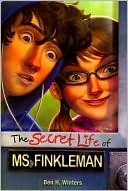
Ben is the author of several plays and novels, including the Edgar-nominated middle-grade mystery The Secret Life of Ms. Finkleman and its follow-up, out today, The Mystery of the Missing Everything. He also wrote two parody novels, the New York Times bestseller Sense and Sensibility and Sea Monsters  (with Jane Austen) and Android Karenina (with Leo Tolstoy). Over the years, Ben has also worked as a bass player, ice-cream scooper, creative writing teacher, and (disastrously) as a cat-sitter. These days Ben lives in Cambridge, Massachusetts with his family. 


Here's the full transcript of our interview with the suspect:  

Ben, our panel of detectives has brought you into the Interrogation Room on suspicion of imprisoning teams of writing elves in your basement. After all, you have written everything from plays to survival handbooks and have THREE books coming out in September: your new middle grade mystery The Mystery of Missing Everything, a paperback release of The Secret Life of Ms. Finkleman, and Bedbugs, a novel for adults. How can this all be the work of one writer? We’re hoping your answers to these questions can chase away our suspicions…


Kristen:   Let’s say you’re not guilty. What’s your secret to finding time to write?

Ben:       First of all, let me say that I appreciate the presumption of innocence. And while I am indeed innocent of having a basement full of writing elves, I am guilty of having two small children, with a third small child arriving any day now. Somewhat counter-intuitively, I’ve found that since becoming a parent, though I have much less time to write, I have become better and better at managing and maximizing the time I do have. Having very clear and intractable boundaries at the beginning and end of my writing day focuses my energies. There’s none of this “I’ll just finish this part later tonight,” or because when “later tonight” rolls around, I won’t be writing anything. I’ll be doing dishes or cleaning bottles or making a row of peanut butter and jelly sandwiches. So it’s not about finding time to write, it’s about making the best use of the time you get.

Secret #2 is a cheap and marvelous computer program called Freedom, which allows one to disable the internet on one’s computer for a set amount of time. I use it both as an anti-procrastination machine and a high-tech kitchen timer.


Diana:   What have you found to be the particular challenges and rewards of writing mysteries for kids?


Ben:      Funny you ask, because right now I’m working on a mystery for adults, and I’m surprised at how many of the lessons I learned writing The Secret Life of Ms. Finkleman and The Mystery of the Missing Everything are so directly applicable in this very dark, very adult new novel. It’s all about the careful corralling of information; I, as the writer, have to know everything (meaning everything -- you can’t B.S. it), and figure out the best ways to reveal just enough to keep the reader from becoming irritated, while withholding enough to keep them intrigued. That basic truth holds true, I don’t care if you’re writing for grown-ups or children or chickens. I guess if you forced me, I’d say that kids need clearer signposts, more jokes, and brighter characters, to keep them interested. But don’t hold me to that, either; there are some very smart young mystery readers out there, and some dense adult ones.


Kristen:   Your portrayal of school life is hilariously dead-on. Do you rely more on memories or recent experience working with students?


Ben:    Thank you! It’s a combination. I’m always surprised and delighted to meet kids now who remind me of kids I knew way back when...I think there’s a wonderful continuity across generations in the mindset of the middle-grader: that mix of anxiety, enthusiasm, self-discovery, fear, and joy. That said, there are definitely certain individuals from my long-ago youth that pop up, variously altered, in my middle-grade fiction. And anyone who has ever been to Montgomery Mall (now Westfield Mall, or some nonsense), in Potomac, Maryland, will recognize the mall where Bethesda Fielding and her friends hang out -- complete with the animatronic chef that pops up and says ‘witty’ things in a thick French accent.


Diana:     Who are your favorite mystery authors and why?
Ben:       PD James. Richard Price.
Very different writers, but both are incredible prose stylists, and both masters are masters of the very tricky art I mentioned above, of the withholding and slow unveiling of information -- when to whisper secrets in our ear, when not to, and when to tell us just enough to figure it out for ourselves.

Kristen:   We hear you teach humor writing workshops. What advice do you have for writers who want to pepper their work with more humor? Can being funny be taught? (Or should we haul you in on charges of impersonating a teacher, as well?)
          
Ben:       Humor, like plot, should come from the core of the characters: from anxiety, ambitions, and desire. People comically embarrass themselves, for example, trying to get something they desperately want, and it’s what we want that makes us who we are. (Sorry -- do I sound like I’m trying to be fancy and philosophical? I’m not. A scene where a seventh grader gets ink all over his face is funny, but it becomes really deeply funny if the pen breaks because he’s been chewing on it all morning because he’s nervous about the math quiz because he forgot to study because that, that right there, you see, is the kind of kid that this kid is.)

Diana:     The Secret Life of Ms. Finkelman is told from multiple points of view, which only intensifies our suspicions about those poor imprisoned teams of writing elves. Why did you decide to tell the story that way? Were some characters easier than others to write?

Ben:      Here comes Mr. Fancy-Pants again, but I think the story will tell you how to write it. In this case I realized early on that it was Bethesda Fielding’s story, but that to move forward properly, and to keep the reader guessing, we’d need to shift around and get to know the other folks first-hand.

          I’m quite proud of the fact that the sequel, The Mystery of the Missing Everything also shifts points of view -- and there’s one POV where the reader does not know whose head they’re in until the very end of the book.

Kristen:  To what extent was writing the sequel different?

Ben:      The nice thing was that, where I wrote Finkleman on spec (as they say), with Mystery I had a deal with HarperCollins. So I benefited from feedback all the way along from my editor there.

Diana:     One last thing — what writing secret will you reveal only under the harsh lights of this interrogation room?

Ben:       Get off the stupid internet. Get a program like Freedom, and/or Antisocial. Don’t start your writing day by checking email. Write down research questions to check later, instead of going online to do it right away, and spiraling into two hours of aimless web surfing. Writing is hard, and we will always find ways to talk ourselves out of getting down to it. So block your internet connection and get down to it.

It looks like we can safely clear Ben of the charges. He’s the real deal! Many thanks to Ben for putting up with the interrogation. We're going to make it up to him by buying copies of his three books out this month. We hope you will, too:
Bedbugs (for adults)

Tomorrow we'll announce the lucky Interrogation Room Book Giveaway winner, who'll receive a free copy of The Mystery of the Missing Everything. UPDATE: We have a winner: congratulations to Sarvenaz Tash! Many thanks for all the entries. There were lots of correct guesses to put into the hat.

We plan to call at least three suspects for questioning in October, so do check back for more author interviews and chances to win!


Related Posts Plugin for WordPress, Blogger...