Showing posts with label settings. Show all posts

Tuesday, May 1, 2012

What's Your Writing Setting?

So....settings in mysteries. Wow, my fellow detectives have covered it all! It's always a little intimidating going last on these themes. First of all, I already feel a little like a fraud blogging about how to write mysteries because it's kind of mystery to me, but second, all the great topics have been taken! Like...Setting as Character, Being There Even If You Aren't, Settings in Middle-Grade Mysteries, Finding Your Way Through an Alien Landscape, and How Sashimi Led to My Novel's Setting.

Yeah, I was going to write all those. :-)

So what's left? Well, I started thinking about my own setting. You know, where I do my writing. You always read about how writers have rituals and routines to get in the mood for writing. A lot of these center around where they write. So I asked my fellow detectives to share a little about their own writing settings. And here's what they had to say:

Diana Renn: Here's the writing corner in my office.


I don't usually have the crime scene tape up -- it's something I was measuring for a promotional thing I'm doing with my publisher -- but sadly, it doesn't look so out of place in that disaster. I'd probably welcome a hard hat too. I write surrounded by cascading piles of paper and books. What you see here are projects (marketing, researching, drafting) all converging on each other. This space is actually clean compared to when I was into heavy revisions on Tokyo Heist last year -- then, for months,I had graphs, charts, and an enormous white board calendar all over the walls. Once a year I do a huge paperwork purge, and I can see I'm getting to that point. Because of the inherent dangers here, I've taken to fleeing the scene, writing in my local library or otherwise on the run.

Talia Vance: My favorite spot to write is the corner of my couch, complete with a cozy blanket and the Saint Bernard of Doom, Huckleberry.  There is even  a Saint Bernard in Spies and Prejudice that was inspired by him.

And here's Elisa Ludwig's writing setting: 

As for mine, well, behold:


I have an awesome office. I can say that because I had absolutely nothing to do with creating it. My husband did it all. Last summer, we were remodeling our bedroom and the wallpaper--oh, the wallpaper!--was taking FOR-EV-ER to remove. Finally, I took our sons to visit my brother and his family so that my husband could finish up the project in peace. Well, three days later, I came home to not only a redone bedroom, but a completely new office! New paint, new hardwood floor, new ceiling fan. And the best part of the story? When I asked him how he knew what colors I wanted, he said that he was standing in the hardware store with a handful of paint chips, trying to decide, when he realized that one was called "Storyteller."

Awww.

Unfortunately, it only looked like the photo for about a day. My office usually more closely resembles Diana's, with piles of papers and books. And more often than not, an extra kid or two, as well. Here's a more typical setting for my writing.


Still my office, but, yeah. That's my novel revision on my laptop--and that's a kid practicing percussion six inches from my elbow. PERCUSSION. Luckily, I work in an elementary school and have nerves of steel. And headphones.

So what about you? Where do your mysteries unfold? Do you have a special spot to write? Tell us about it in the comments.

---

W.H. Beck is an elementary school librarian by day and a middle grade author by night (or sometimes, really early mornings). Her first novel, MALCOLM AT MIDNIGHT, stars classroom pets at midnight and is available in September from Houghton Mifflin.

Tuesday, April 17, 2012

Case Files from Our Detectives: Setting as Character

Photo by T. Roger Thomas
Over the past several weeks our detectives have been discussing Case Files on Crime Scenes a.k.a. Settings. My Case File today is about using setting as a character.

While I never intended to set all my stories in Alaska, so far, I have. It isn't just because I grew up and lived there for over thirty years -- as a military wife, I have lived and visited many, many places that would make for great settings. And it isn't just because Alaska offers such a pristine setting -- although it does, with its forests, lakes, rivers, mountains, glaciers, etc.

No, I think it is the character appeal of Alaska; the unique challenges and differences that the land offers which can disrupt and aggravate, twist and exacerbate, a crime or mystery that make setting my stories in Alaska so appealing. The endless darkness in the winter, the endless daylight in the summer, the harshness of the winters, the deadly forest fires of the summer, the absolute isolation that one can be engulfed in if you stray only moments off the path -- mystery, intrigue, simplicity, rugidness, peace, severity, safety, danger -- Alaska can offer up anything you want it to and create conflict and complexity in your story just as any character would.

In my novel BLIND SPOT Alaska is less character, more setting, but its harsh winter does hide the truth about a classmate's death from my main character, Roz, for nearly six months, which adds to the immediacy of the thriller when Roz learns the truth. In my current work-in-progress (which for now is titled MURDER POINT) however, Alaska is a definite character. My main character, Kat, heads to an Alaskan campground to meet the father she's never known and discovers murder instead. I use the isolation of the campground, the contrast between Kat's lifestyle in D.C. and this new rustic lifestyle, as well as the all-day sunlight to amp up the threats, conflicts, and suspense in this story, giving Anchor Point, Alaska just as big a part in the story as any other character.

While yes, Alaska lends itself to this type of writing, any setting can be used as a character in a mystery or thriller, by simply finding ways that the setting, like any antogonist,  can disrupt and deepen the danger. Creating limitations to a setting is a quick way to do this -- maybe there is a high cliff on one side of your setting that can't be passed or floorboards that have rotted that are too dangerous to walk on -- anything that restricts what your character can do. Then you can create a situation in which your main character's only option is to head towards those limitations you have set. This immediately amps up the suspense and deepens the danger, and as your character heads there, you can use that setting you have created to hinder her every move, just as an atogonist would. Some of the most intriguing stories I've read are those where the setting takes part in the plot just as much as the characters do. But truth be told -- I do it because it can be great fun using the setting to put charcaters in as much peril as their antagonists do!
_____________________________________________


What if a classmate went missing right after you fought with her at a party and she was later found dead? What if you couldn't remember anything after that fight? Not even how you got home? Would you tell the police the truth? Or would you lie about what you remember until you could find out what really happened that night?

16-year-old Roswell Hart finds herself in this very predicament in Laura Ellen's YA thriller, BLIND SPOT (October 2012, Houghton Mifflin Harcourt)

Tuesday, March 27, 2012

Finding Your Way Through an Alien Landscape

Pretty Crooked is set in the Arizona town of Paradise Valley. The town is critical to the story in numerous ways. The story had to be set in a wealthy community (PV has a median home price of $1.74 million). I liked the Sonoran Desert setting for its dramatic possibilities, how it could create a sense of novelty and exoticism for Willa at first, and later, a sense of alienation and loneliness. Paradise Valley seemed to fit the bill on all fronts. Best of all, its name, of course, symbolizes Willa's feelings about the place when she first moves there.

As I sat down to write, there was just one problem: I live in Philadelphia. I'd only been to Arizona once, and most of that time was spent at a hotel attending conference meetings.
So how to conjure up a place you have never been? Research, research, research. I looked at photographs, weather patterns, travel books, nature blogs, horticultural websites, real estate listings, shopping sites, and Yelp. Google Maps came in handy when figuring out what things looked like from the perspective of a car driving down a particular road. YouTube had some amazing tourist videos that brought the area to life for me. And good old Wikipedia had the demographic and architectural information I needed. Where needed, I relied on good old-fashioned imagination.
Now, I have no idea if someone who lives in Paradise Valley will find this portrayal to be believable. But I do know that the setting remains an essential component of the finished novel–and it's almost, to use the cliche, a character in and of itself. Just as I might get really invested in my own character, I fell in love with this setting as I wrote the book, and hope to go there someday to see it in person. Ultimately, I just can't imagine Pretty Crooked taking place anywhere else.

Monday, March 26, 2012

Mystery Monday #26

Welcome to our regular Monday feature, where you'll find different kinds of writing prompts and exercises. Each week, we'll give you something to help exercise your mystery-writing muscles.

Our Tuesday blogging theme this month is settings. So today's prompt is designed to help you to choose a geographic setting -- for a scene, a story, or a novel.


Do exotic destinations seize your imagination? Many writers of middle grade and young adult mysteries throw their sleuths into international (or, in the case of Beth Revis, intergalactic!) intrigue. Some examples: 

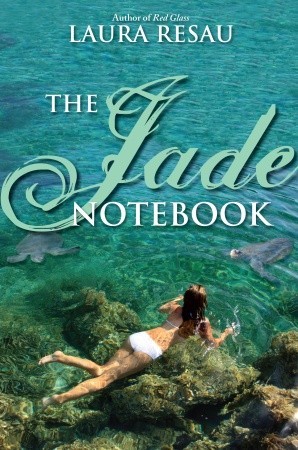
--Laura Resau, The Indigo Notebook (Ecuador), The Ruby Notebook (southern France), The Jade Notebook (Mexico) 
--Susan Runholt, The Mystery of the Third Lucretia (The Netherlands), Rescuing Seneca Crane (Scotland), Adventure at Simba Hill (Africa) 
--Anne Nesbet, The Cabinet of Earths (Paris)
--Beth Revis, Across the Universe and A Million Suns (outer space!)  

Or, does local color inspire you? Some of our favorite kids' mysteries also take place in everyday venues like neighborhoods or schools or workplaces, or in places that don't require passports or visas. Such as:


--Peter Abrahams, The Echo Falls mystery series (suburban neighborhood)
--Josh Berk, The Days of Hamburger Halpin (a Pennsylvania town, and a historic mine shaft, the site of a class field trip -- and more)
--Linda Johns, the Hannah West series (various Seattle neighborhoods, each novel in a different one).


Here's a writing exercise designed to get you to pin down some possible settings: 


1. Take a few minutes to brainstorm exotic destinations and ordinary ones, or foreign versus closer to home. List as many as you can - doesn't matter if you've actually visited them or not.


2. Circle the ones that intrigue you the most.


3. For each place you circled, brainstorm aspects that would led themselves well to a mystery (or to the mystery you're working on). For example, if I circled "Istanbul," I might list: "winding alleys -- great for hiding or fleeing. Carpet sellers everywhere -- shady dealings? More hiding opportunities?


4. For each place you circled, now write more detailed lists about activities that might take place there and institutions or organizations that are significant or of interest there. The activities and organizations could be legal, illegal/ illicit, or any combination. For example, for "Istanbul" I might list "boat tours on the Riviera" as an activity and "Boat charter companies" as an organization. As your lists grow, you might find ideas for a possible mystery plot -- or plot twist -- come to mind!


[Steps 3 and 4 were modified from Hallie Ephron's Writing and Selling Your Mystery Novel, Writer's Digest Books, 2005.]

Monday, March 19, 2012

Mystery Monday #25

Welcome to our regular Monday feature, where you'll find different kinds of writing prompts and exercises. Each week, we'll give you something to help exercise your mystery-writing muscles.

Our Tuesday theme this month is settings in mysteries for young readers. So today's prompt is designed to help you zoom closer into a setting--and maybe even discover a mystery hidden in there.

To start, choose a setting. We're going to be digging for the details that make a setting come alive in a reader's mind, so make sure it's a time and place you know well. Maybe it's your bedroom. Or a classroom. Maybe it's the inside of minivan. Or your birthday party last summer.

Next, can you find any photos of it? I use them in my writing to help me notice the details. If you really want to immerse yourself, there's nothing better than taking a field trip and taking some photos and notes.
This is one of the photos of the old school I used for setting inspiration when writing the upcoming MALCOLM AT MIDNIGHT.
Now, write a description of the setting. Include the little details--the chipped countertop, the engine light that is on in the car. But don't stop there. Close your eyes. How would you describe it using your other senses? What's the smell of a girls' locker room? What does a campfire sound like? How does the tile floor feel on bare feet?

Now, take a step back. What kind of mood do you want to set? Go back and look at your description again. Are there any words that you could change to help evoke that mood more? Sometimes just a more specific verb--sat vs. hunched--or a word change--yellow or acid green?--can slant the whole tone of a piece.

Now, finally, pick one detail from your description. It may be the most interesting. Or maybe it's something that everyone would overlook. Why is it there? How did it come to be?

This is where your story starts . . .

This is what I would call a prewriting activity. You might want to use this description, or you might not. Sometimes writers just need to have a strong sense of setting in their heads; the actual details never find their way to the story.

But most likely, there are some gems in that description. If you do use them, be careful. You probably don't want to plunk your description in as a whole paragraph. Long descriptions tend slow down the action and pace of a story--something that is crucial when writing both mysteries and for kids. Instead, sprinkle in those details--the more specifc, the better--throughout your whole scene.

Happy writing!
Related Posts Plugin for WordPress, Blogger...