
We’ve got another suspect in the Interrogation Room!
Today April Henry has been hauled in, accused of murdering people on paper –
something she freely admits to on her website. Here’s what our detective Laura
Ellen uncovered:
Suspect’s Bio:
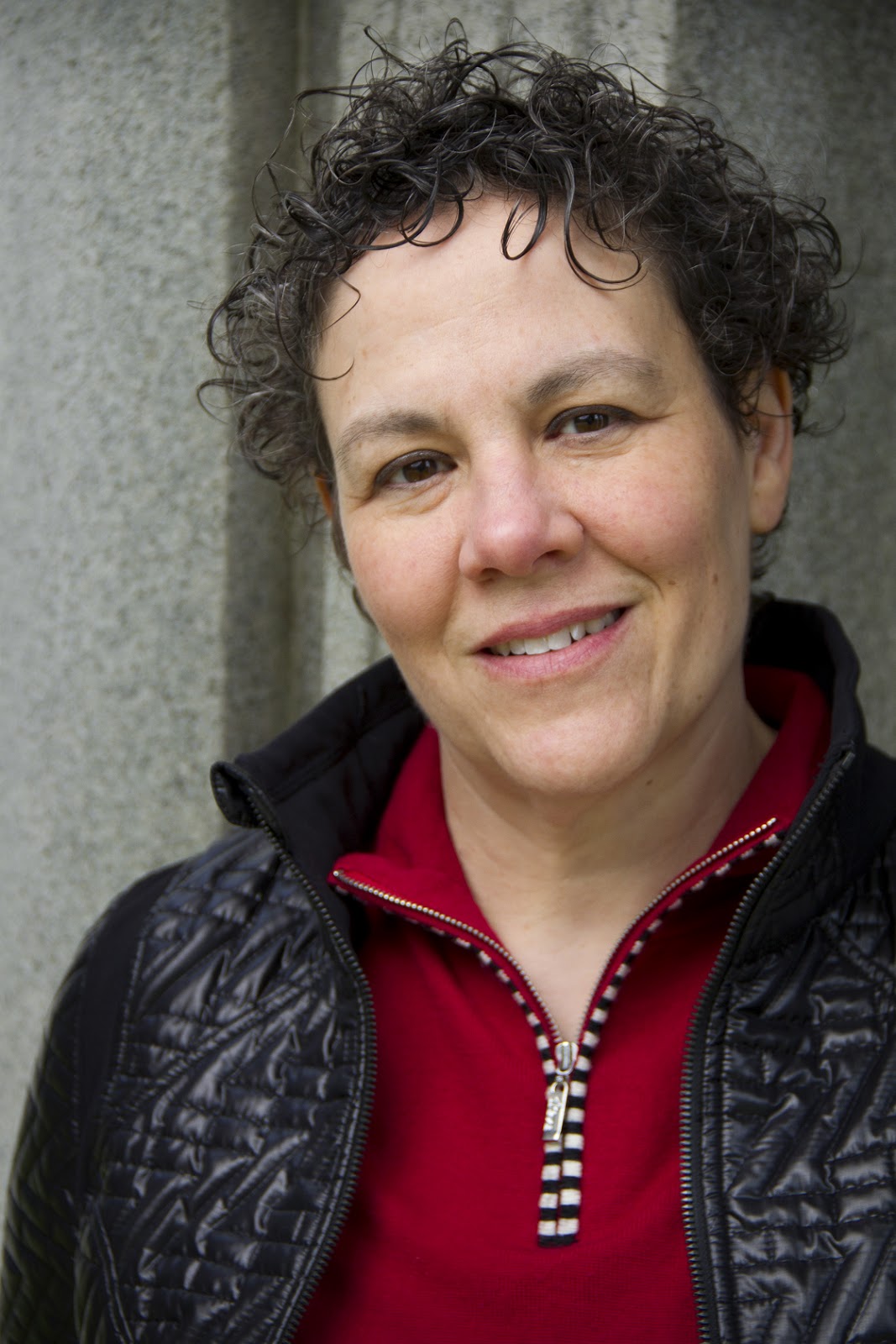
April Henry
knows how to kill you in a two-dozen different ways. She makes up for a
peaceful childhood in an intact home by killing off fictional
characters. There was one detour on April's path to destruction: when she
was 12 she sent a short story about a six-foot tall frog who
loved peanut butter to noted children's author Roald Dahl. He liked it so
much he arranged to have it published in an international
children's magazine. By the time she was in her 30s, April had started
writing about hit men, kidnappers, and drug dealers. She has published 15
mysteries and thrillers for adults teens, with more under contract.
Books:

The Girl Who Was Supposed to Die is April Henry’s most recent crime.
“Take her out back and finish her off.”
She doesn’t know who she is. She doesn’t
know where she is, or why. All she knows when she comes to in a ransacked cabin
is that there are two men arguing over whether or not to kill her.
And that she must run.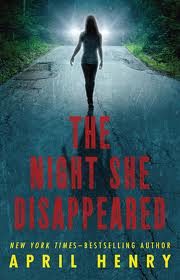 This nail-biting thriller involves
murder, identity theft, and biological warfare. Follow Cady and Ty (her
accidental savior turned companion), as they race against the clock
to stay alive.
This nail-biting thriller involves
murder, identity theft, and biological warfare. Follow Cady and Ty (her
accidental savior turned companion), as they race against the clock
to stay alive.Other books for teens by April Henry:
The Night She Disappeared
Girl, Stolen
Torched
Shock Point
And several books for adults. See her website for a list
Interrogation:
 April, on your website you say: “I kill people, but only on paper” -- your latest book, The Girl Who Was Supposed to Die definitely fits this MO as it begins with your main character about to be finished off by two men!
Tell us about your career path. How did you begin writing thrillers and mysteries? What drew you to this genre? What is it about killing people on paper that you love so much?

 I started writing around my 30th birthday. I wrote one book that got rejected by dozens of agents. The next book was picked up by an agent (and we’re still together nearly 20 years later), but just garnered nice rejection letters from editors. The third book didn’t even get very good rejection letters. My agent said she thought the fourth book would sell as a mystery. I told her I didn’t care what she called it, I just wanted to be published.
Mystery is a very flexible genre - it can be literary or formulaic or something in between. I like reading page-turners and I like writing them, too. While I’m a nice person in real life (I have a hard time not apologizing to my sparring partners in kung fu), it’s kind of fun to imagine being a bad guy or gal.
I don’t want to give anything away (I hate spoiler reviews and interviews!) but it is obvious you had to some research for The Girl Who Was Supposed to Die. How do you go about researching? Do you just internet browse or do you go out and interview experts?
I went into the story knowing I wanted the girl to not remember anything, and knowing what had caused that. I did not know why the two men wanted to kill her, where her family was, etc. That took forever. Tons of brainstorming. I ended up doing a lot of research into how to make bioweapons (it’s a wonder the FBI did not come for me) and ultimately ran several chapters past Dr. Denene Lofland, who has worked in anti-bioterrorism with a secret security clearance. She told me my scenario was “plausible and evil.”
Plausible and evil - nice! I think :) You write for both adults and teens. Do you prefer writing one more than the other? When you sit down to write something new, how do you decide if it is going to be for adults or teens? Do you write it first and then see where it falls, or do you know before you even start plotting who the audience will be?
I went into the story knowing I wanted the girl to not remember anything, and knowing what had caused that. I did not know why the two men wanted to kill her, where her family was, etc. That took forever. Tons of brainstorming. I ended up doing a lot of research into how to make bioweapons (it’s a wonder the FBI did not come for me) and ultimately ran several chapters past Dr. Denene Lofland, who has worked in anti-bioterrorism with a secret security clearance. She told me my scenario was “plausible and evil.”
Plausible and evil - nice! I think :) You write for both adults and teens. Do you prefer writing one more than the other? When you sit down to write something new, how do you decide if it is going to be for adults or teens? Do you write it first and then see where it falls, or do you know before you even start plotting who the audience will be?
If my main character is a teen, then it’s a YA. An adult, an adult book. I have really come to love writing for teens. They are fresh and full of energy. They don’t hide their feelings. I get probably 20 emails a week from teens. Of course, sometimes they will tell you that your book is the best they have ever read, and you later learn it’s the only book they’ve ever read all the way
through.
And what an honor to be that author who got a teen to read a book all the way through for the first time! One of your adult series you co-author with Lis Wiehl. Tell us a little about the process. Do you plot together, take turns writing, etc.
Lis is a TV reporter, and has been a federal prosecutor. Her
dad was an FBI agent. We come up with plots that reflect her interesting
background, then I’ll work on a first draft in consultation with her. Then together we work to create the final
draft.
Speaking of series, you have a very intriguing new YA series coming out soon. Can you tell us about it?
I’m excited for my new Point Last Seen series. The first is
due out in 2014. I got the idea after talking to a friend’s teenager. She
volunteers with Multnomah County Sheriff’s Office Search and Rescue. Like most
groups, MCSO SAR looks for people who are lost in the natural areas. What makes
this group unique is that it’s a teen-led group . While there are adult
volunteers, they can’t be leaders. The
second thing that sets it apart is that 30-40% of what they do is crime scene
evidence recovery, including recovery of human remains. Many of the volunteers are
interested in future careers in law enforcement or crime scene
investigation. I have been taking classes
with them and going out on training exercises.
Oh my gosh that sounds so cool -- what an awesome opp for those teens! I really look forward to reading the first book in the series. One last question before we let you go. All of your crimes are set in the Pacific Northwest. Do you do this because it is what you are familiar with and does it ever limit you in any way?
Oh my gosh that sounds so cool -- what an awesome opp for those teens! I really look forward to reading the first book in the series. One last question before we let you go. All of your crimes are set in the Pacific Northwest. Do you do this because it is what you are familiar with and does it ever limit you in any way?
I grew up here. I
could not realistically set a book in Nashville or New Orleans or New
York. I’m not of those places. However, I don’t think it’s limiting.
Just like the film makers who have turned Toronto into
whatever city in the world they need, the Pacific Northwest offers enough
variety for a thousand writers. We’ve got cities and tiny towns. You want
deserts? We’ve got ‘em. Caves? Ditto. Mountains perfect for concealing shallow
graves, coastlines where a body might wash up, lonely forests where no one will
hear your poor character scream, even freak windstorms strong enough to flip
semis on their sides.
Spoken like a true thriller writer! Before we release you, tell us where we can find you.
I do a lot of school visits these days, so if you know of a middle school or high school that has authors come to speak, have them contact me. You can find me on my website: aprilhenrymysteries.com and I am also on Facebook: www.facebook.com/AprilHenry
and Twitter: @aprilhenrybooks
Thanks April!


